Showing posts with label Trinity. Show all posts

Sunday, June 12, 2022

Unraveled: Sarah Laughs

The Lord appeared to Abraham at the oaks of Mamre while he sat at the entrance of his tent in the day’s heat. He looked up and suddenly saw three men standing near him. As soon as he saw them, he ran from his tent entrance to greet them and bowed deeply. He said, “Sirs, if you would be so kind, don’t just pass by your servant. Let a little water be brought so you may wash your feet and refresh yourselves under the tree. Let me offer you a little bread so you will feel stronger, and after that you may leave your servant and go on your way—since you have visited your servant.”

They responded, “Fine. Do just as you have said.”

So Abraham hurried to Sarah at his tent and said, “Hurry! Knead three seahs of the finest flour and make some baked goods!” Abraham ran to the cattle, took a healthy young calf, and gave it to a young servant, who prepared it quickly. Then Abraham took butter, milk, and the calf that had been prepared, put the food in front of them, and stood under the tree near them as they ate.

They said to him, “Where’s your wife Sarah?”

And he said, “Right here in the tent.”

Then one of the men said, “I will definitely return to you about this time next year. Then your wife Sarah will have a son!”

Sarah was listening at the tent door behind him. Now Abraham and Sarah were both very old. Sarah was no longer menstruating. So Sarah laughed to herself, thinking, I’m no longer able to have children and my husband’s old.

The Lord said to Abraham, “Why did Sarah laugh and say, ‘Me give birth? At my age?’ Is anything too difficult for the Lord? When I return to you about this time next year, Sarah will have a son.”

Sarah lied and said, “I didn’t laugh,” because she was frightened.

But he said, “No, you laughed.”

The Lord was attentive to Sarah just as he had said, and the Lord carried out just what he had promised her. She became pregnant and gave birth to a son for Abraham when he was old, at the very time God had told him. Abraham named his son—the one Sarah bore him—Isaac. Abraham circumcised his son Isaac when he was eight days old just as God had commanded him. Abraham was 100 years old when his son Isaac was born. Sarah said, “God has given me laughter. Everyone who hears about it will laugh with me.” She said, “Who could have told Abraham that Sarah would nurse sons? But now I’ve given birth to a son when he was old!” --Genesis 18:1-15, 21:1-7 (CEB) 

Grace, mercy and peace to you from the Triune God - Creator, Redeemer, Sustainer. Amen.

The Festival of the Trinity. The one Sunday and the one topic that every pastor loves to preach on. Yeah, not so much.

Yesterday, as we closed Synod Assembly with worship, we heard a sermon by Deacon Mary Ann Schwabe. She was the representative from churchwide, from the national body of the ELCA, there, among other things, to bring greetings from Presiding Bishop Elizabeth Eaton. She opened her message with a quote about the Holy Trinity. About the impossibility of explaining the Trinity. A quote from Luther, who wrote: "To deny the Trinity is to risk our salvation. To try to explain the Trinity is to risk our insanity."

You see, try as theologians might, we don’t fully understand the Trinity. This Godhead made up of three Persons: Parent/Creator, Son/Redeemer, and Spirit/Sustainer. And to try to explain it is probably, as Luther suggested, inviting insanity.

So, for the moment, I’m not going to try. Although we will return to this topic in just a second or two.

Instead, I’d like to turn to our primary text today - this story about Abraham and Sarah. Really, a story about Sarah. And her laughter.

Early in the week, when I was exegeting this text before leaving for Muncie, I can’t even begin to tell you how many different interpretations and explanations there were about why Sarah laughed in this story. Some suggested she laughed from amusement - from an image of she, at the age of 90, and her husband Abraham, nearing 100, making a baby together. Some suggested that she laughed at the preposterous idea that, at the age of 90, post-menopausal, there was even any remote possibility of her conceiving a child. Others suggested that her laughter came from a place of deep bitterness over the fact that she and Abraham had not had the child - the heir - long promised by God. And yet others wrote that her laughter was from disbelief, from doubt about what the visitor - rather, the three visitors (pay attention to that especially on this Trinity Sunday) predicted - that Sarah was laughing in disbelief, doubt, and perhaps even scorn over the very possibility.

Perhaps all of these explanations of Sarah’s laughter are true, because much had happened before our story today. God had promised Abraham and Sarah to make of them a great nation. Then, after this hadn’t happened and after Sarah had moved beyond child-bearing age, she had taken matters into her own hands, giving Hagar, her servant girl to Abraham. Forcing her into surrogacy. Then, growing jealous when Hagar became pregnant with Ishmael, Abraham’s first-born son. All of this then followed by a visit, at the age of 90, from these three strangers whom we, from the outside looking in, know to be God - strangers who tell her that by next year at this time she will have a son. Her laughter must have come from all of these different places: from amusement, and bitterness, and grief, and even pure glee at the absurdity of it all. 

But, mostly, it would seem, at least to me, that Sarah’s laughter comes from disbelief. From a lack of belief in the future God has promised both her and Abraham. A disbelief that, by the following year, is completely unraveled by the gift of her son, Isaac. Whose very name means “laughter.” 
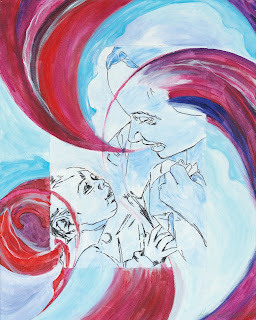
I mentioned at the beginning of worship this morning that, for 12 weeks, we will be hearing 12 different stories or resilience from Scripture. I don’t know about you, but I’ve been hearing the word - resilience - a lot over the past several months. This past week, I read a definition for this word in a Psychology Today article: Resilience is the psychological quality that allows some people to be knocked down by the adversities of life and come back at least as strong as before. Rather than letting difficulties, or traumatic events, or failure overcome them and drain their resolve, people who are resilient find a way to change course. To heal emotionally. And to continue moving forward.

In a related article I also read that people of faith are often more highly resilient. Because, in some ways, faith is synonymous with hope. Both faith and hope allow us to see a future beyond the present moment. But, it is faith that helps us more readily understand and accept that our present difficulties are part of the path to a better future. That’s the nature of faith. The nature of belief. To be able to see the connections between our present situation and the future. The opposite of this is disbelief. It's disbelief that led, in large part, to Sarah's laughter. Because, after all that had happened, after all she'd experienced, she was no longer able to see the future God had promised for her. And for Abraham. 

I wonder how many people in our world today lack this kind of faith. This belief in the future. And, really, is it any wonder that they do? Every day we are witness to a world that just seems to be struggling. To be hurting so deeply. Even to be falling apart. 

Or maybe it’s not just the world that seems to be so unsettled. Perhaps, we’re experiencing it in our own lives. An unexpected illness. Or a deep loss. Or even confusion about who we are and where we are at in our lives. Where it feels as though the future is so uncertain, so dark and cloudy. Or even, perhaps, when it feels as though there is no future. 

It is then - just as for Sarah - that, as one contemporary theologian puts it, it is then that our loving and relational God, the mysterious Trinity comes and invites us in. To abide in the holy. To admit the difficulties of the present. And the truth of what is unknown. To stop hiding behind false statements and facade of sureness. And to, once again, be reminded of the future God has in store for us. A future of abundance and wholeness. Of lives filled with hope and faith and love. And, especially, of lives that are full of laughter - the joyous laughter that comes from trusting God and living into the hope of that future God has promised for you and me, and for all people - a future given to us through the unexplainable presence and power of God, known as parent and Creator, as Word made flesh, and as life-giving Breath. 

Praise be to God! Amen.

Preached June 12, 2022, at Grace & Glory, Prospect, with Third, Louisville, and New Goshen Presbyterian, Prospect.
Holy Trinity
Readings: Genesis 18:1-15, 21:1-7; Psalm 116:1-2, 12-19


Friday, June 29, 2018

Tuning In: God Tunes Into Us

On the third new moon after the Israelites had gone out of the land of Egypt, on that very day, they came into the wilderness of Sinai. They had journeyed from Rephidim, entered the wilderness of Sinai, and camped in the wilderness; Israel camped there in front of the mountain. Then Moses went up to God; the Lord called to him from the mountain, saying, “Thus you shall say to the house of Jacob, and tell the Israelites: You have seen what I did to the Egyptians, and how I bore you on eagles’ wings and brought you to myself. Now therefore, if you obey my voice and keep my covenant, you shall be my treasured possession out of all the peoples. Indeed, the whole earth is mine, but you shall be for me a priestly kingdom and a holy nation. These are the words that you shall speak to the Israelites.”

Then God spoke all these words: I am the Lord your God, who brought you out of the land of Egypt, out of the house of slavery.  Exodus 19:1-6, 20:1-2 (NRSV)

Grace and peace to you from God, our Creator; Jesus, our Redeemer; and the Holy Spirit, our Sanctifier. Amen.

Welcome to this day! It is the first Sunday of four that we will spend thinking about the Ten Commandments, or the Ten Words, as they are called in Judaism. It’s also Trinity Sunday, which is the one Sunday of the church year in which we attempt to explain and to celebrate the Trinity.

Can you think of something else we’re celebrating this weekend?

That’s right! Memorial Day! What does Memorial Day mean to you?

Yes, it’s a day of remembering. We’ve been doing a lot of remembering. Last week, we celebrated the festival of Pentecost. When we remember the sending of the Holy Spirit--the Advocate that Jesus had promised to send to the disciples after his ascension. You may remember that we heard that it wasn’t an accident that there were large crowds in Jerusalem on that day. It was no coincidence. They had come to the city--to the temple--to celebrate the Jewish festival of Shavu’ot. This was a holiday of remembering for them, too, just like Monday’s holiday is for us.

Do you remember what the Jewish people were remembering? Yes, it was the remembrance of God’s giving of the Torah on Mount Sinai. Fifty days after the Passover. Fifty days after Israel had been freed by God from slavery in Egypt. They had passed through the wilderness and reached Mount Sinai. It was at Mount Sinai that Israel entered into a covenant with God--the promise we just heard in the reading from Exodus 19: That, if they obeyed God and stayed true to God’s covenant, then they would be God’s most precious possession out of all the peoples. Israel would be a kingdom of priests for God. A holy nation.

So, to help Israel stay true to the covenant, God gifted them with the Torah. Or the Law. We often think that this is just the Ten Commandments. But, it was much, much more. The video we are about to watch will help us better understand what the Torah meant to Israel. It will also help us understand what the Torah meant to Jesus. 

Let’s watch.

Perhaps the biggest challenge we have as Protestants is that we don’t quite understand what to do with the Law. We teach that we are saved by faith and not by our works--not by the things we do. That we are saved simply through our faith. That we can’t earn our own salvation.

Yet, what we heard in the video is that the law is all about relationships. About our relationship with God. And about our relationships with each other, with our neighbors. Even with our enemies.

It seems perfect that we should begin this series on the Ten Commandments today, on Trinity Sunday. This day when we celebrate the Three Persons of the Godhead. Three distinct persons--each with its own nature, each with its own purpose, each unique, and yet one. Unified with each other. In relationship with each other. You see, the very nature of God is relational. And, it’s this same God that has created us to be in relationship. To be in relationship with God. And to be in relationship with each other. To love God and to love our neighbor. 

Luther wrote in his introduction to the Ten Commandments that the person who knows the ten commandments knows all of scripture: love God, and love your neighbor. 

The Law teaches us and leads us how to live into God’s unchanging goal for us. God’s vision about what a just and safe a society looks like. A vision of a world of shalom, of wholeness. A vision of a world that is properly ordered--that is tuned into God and into each other. 

The Formula of Concord, which is one of the principle documents based on God’s Word that we as Lutherans confess and affirm, lays this out clearly for us, as believers. 

“We believe, teach, and confess that, although people who truly believe in Christ and are genuinely converted to God have been liberated and set free from the curse and compulsion of the law through Christ, they indeed are not for that reason without the law. Instead, they have been redeemed by the Son of God so that they may practice the law day and night.”

This is why the Law is still important for us. Because it is the ideal--God’s ideal vision--that we are called to live into. We, who have been freed from our own slavery to sin by Jesus’ dying on the cross, are freed, then, to love and to serve our neighbor. 

Because it is always about relationship. With God. And with each other. Always. 


Amen.

Preached May 27, 2018, at Grace & Glory Lutheran Church, Goshen, KY.
Pentecost 1
Readings: Matthew 22:34-40; Exodus 19:1-6, 20:1-2

Monday, June 12, 2017

In the Image of God

Now the eleven disciples went to Galilee, to the mountain to which Jesus had directed them. When they saw him, they worshiped him; but some doubted. And Jesus came and said to them, “All authority in heaven and on earth has been given to me. Go therefore and make disciples of all nations, baptizing them in the name of the Father and of the Son and of the Holy Spirit, and teaching them to obey everything that I have commanded you. And remember, I am with you always, to the end of the age.” Matthew 28:16-20 (NRSV)


Grace and peace to you
from the One who is
and who was
and who is to come.
Amen.

Welcome to Holy Trinity Sunday!
Every pastor’s nightmare.

Why? You might ask.
Well,
it’s because no matter what I
or any other pastor tries to say about the Trinity,
it is inevitable
that we will lapse into some form of heresy.
So, I am not going to preach today
about the Trinity--
the Triune God,
the Three Persons of the Godhead,
or whatever other name
you want to give our God.
I will let the two-and-a-half pages
of the Athanasian Creed
attempt to do that shortly.

Instead,
I am going to the beginning.
The very beginning.
To the beginning of all time.
Because that is where our Genesis reading begins.
“In the beginning
when God created the heavens and the earth.”

In the original Hebrew,
the word used for God is Elohim.
Interestingly,
this is a plural word.
The singular word for God is El.

It’s also helpful to know that the word,
elohim,
is a simple, ordinary word for God.
It can be used to identify any deity.
It’s not a personal name.
Its use implies
that this God is not just the God of Israel,
but God,
the creator of the entire universe.

Already,
in just the first phrase,
we have a sense
of not only the plural nature of this God,
but also the sovereign nature
of this creator of the whole world--
of a sovereign God
who creates effortlessly,
freely
and with no limits.

So, God goes about creating the world.
God thinks,
God speaks,
God births,
God prevails,
God creates,
God builds,
God arranges,
God shapes,
and, then,
God delegates.
We read in verse 26,
where God says,
“Let us
(Do you once again hear
the plural nature of God there?)...
let us make humankind in our image,
according to our likeness.”
Two early church fathers,
Gregory of Nyssa and Chrysostom,
called this phrase--
”let us”--
the divine deliberation
among the persons of the Trinity.
Luther wrote
that it confirms the mystery of our Christian faith,
namely,
that there is one eternal God,
in whose divine essence
there are three distinct persons.

It was the eternal Triune God there,
fully present at the creation of the cosmos.
And it was the eternal Triune God
who made humankind in God’s own likeness.
In the image of God.

The image of God.
That’s an interesting expression,
isn’t it?
We use it often,
but I wonder if we know what it really means.
In the image of God.
All of humanity,
created in the image of God.
We read that in Genesis 9
as God is instructing Noah
upon exiting the ark,
“Whoever sheds the blood of a human,
by a human shall that person’s blood be shed;
for in his own image,
God made humankind.

It would seem to me that,
if each of us
and all of us
are created in God’s own image,
there is great dignity in that.
Great dignity in what it means to be human.
For me
and for you
and for every person we meet.
How does it change your reaction
or response to someone
if you understand that they,
like yourself,
have been created in God’s own image.
That homeless person on the street?
That next-door neighbor
who makes you a little crazy?
That person
who just cut you off in traffic?
President Trump?
Hillary Clinton?

Does it change things for you
if you view each one in that list
and of all humanity
as made in the image of God?

There is great dignity
for all people
in being created in God’s image.
It is the same dignity,
and glory and honor,
that the psalmist writes about in Psalm 8…
“When I look at your heavens,
the work of your fingers,
the moon and the stars
that you have established;
what are human beings
that you are mindful of them,
mortals that you care for them?
Yet you have made them
a little lower than God,
and crowned them
with glory and honor.
You have given them dominion
over the works of your hands;
you have put all things
under their feet…”

Yes,
there is dignity
in being created in God’s image.
But,
there is also great responsibility.

There is this fancy word in theology
that I really like--
perichoresis.
Theologians often talk
about the perichoretic relationship
of the Triune God.
Perichoresis is a word
that describes this relationship:
as co-indwelling,
co-inhering,
and mutual interpenetration.  
Alistair McGrath writes that
“it allows the individuality
of the persons
to be maintained,
while insisting
that each person
shares in the life
of the other two.”
In this relationship of the Triune God,
there is separation,
yet there is togetherness.
There is individuality,
yet there is community.

How the three persons
of the Godhead
live in relationship to each other
is how God has created all creation to live.
Not just humanity,
but all creation.
Respecting the gifts
and individuality of the other.
Yet,
loving and caring for each other
and all creation
in full relationship,
together,
in community.
A community of being
in which each person
maintains its distinctive identity,
yet is interconnected to the other.  

Now,
we know
that we are not now perfect representations
of the image of God.
In our fallen state,
we constantly dismiss this
in others and in creation.
We ignore those who we think are unimportant,
or disrespect those with no power.
We manipulate others for our own ends.
We pollute and damage creation,
using it for our own selfish needs
instead of how God desires.

The good news,
however,
as we read in Colossians 3,
is that our new selves
are being “renewed in knowledge
according to the image of its creator.”
This renewal,
this creative work
doesn’t happen by our own understanding
or strength.
Instead it happens through God,
through the redemptive work
of the Son on the cross
and through the sanctifying work
of the Holy Spirit
that begins in our baptisms.

And, it happens here
in this place.
In community.
Here,
inside these walls,
with each other.
It is here
where we continue to be shaped
and formed
through the Word
and in the Sacraments,
in relationship with each other,
to become the people who God desires us to be--
people created in the image of God.

This is God’s desire for us.
This is God’s desire for all humanity.
God is determined
that we will all be reshaped
into God’s image,
just as God intended us to be
from the sixth day of creation.
This,
as the church,
is our task.
It is the same task given by Jesus
to the disciples:
to participate in God’s mission.

Did you hear that?
To participate in God’s mission.
Notice that it is God’s mission
and not ours
or that of the church.
It is God’s mission
that we will all be reshaped
into God’s image.
We are called to give witness
to that mission--
how we have experienced God
so that others might see
and wonder how God is working.
To witness through word and action
to what God is already doing
in our neighborhood,
our community,
and our world.
God is always ahead of us,
creating
and renewing.
Our task
is to join God in that work--
in God’s mission--
and to testify to God
as the source of all grace,
all love
and all community.

To join the dance of the Trinity.
To jump into that relationship of mysterious,
unexplainable,
yet, unbelievable
Three in One.
To be freed
in hope and love
and to be woven into full relationship
with the Triune God
and with all humanity
and all creation.

How else can we respond
except in the beginning
and ending words of our psalm today:
“O Lord,
our Sovereign,
how majestic is your name
in all the earth!”


Amen.

Preached June 11, 2017, at Grace & Glory Lutheran, Goshen, KY.
The Holy Trinity
Readings: Genesis 1:1-2:4a, Psalm 8, 2 Corinthians 13:11-13, Matthew 28:16-20