Showing posts with label laughter. Show all posts

Sunday, June 12, 2022

Unraveled: Sarah Laughs

The Lord appeared to Abraham at the oaks of Mamre while he sat at the entrance of his tent in the day’s heat. He looked up and suddenly saw three men standing near him. As soon as he saw them, he ran from his tent entrance to greet them and bowed deeply. He said, “Sirs, if you would be so kind, don’t just pass by your servant. Let a little water be brought so you may wash your feet and refresh yourselves under the tree. Let me offer you a little bread so you will feel stronger, and after that you may leave your servant and go on your way—since you have visited your servant.”

They responded, “Fine. Do just as you have said.”

So Abraham hurried to Sarah at his tent and said, “Hurry! Knead three seahs of the finest flour and make some baked goods!” Abraham ran to the cattle, took a healthy young calf, and gave it to a young servant, who prepared it quickly. Then Abraham took butter, milk, and the calf that had been prepared, put the food in front of them, and stood under the tree near them as they ate.

They said to him, “Where’s your wife Sarah?”

And he said, “Right here in the tent.”

Then one of the men said, “I will definitely return to you about this time next year. Then your wife Sarah will have a son!”

Sarah was listening at the tent door behind him. Now Abraham and Sarah were both very old. Sarah was no longer menstruating. So Sarah laughed to herself, thinking, I’m no longer able to have children and my husband’s old.

The Lord said to Abraham, “Why did Sarah laugh and say, ‘Me give birth? At my age?’ Is anything too difficult for the Lord? When I return to you about this time next year, Sarah will have a son.”

Sarah lied and said, “I didn’t laugh,” because she was frightened.

But he said, “No, you laughed.”

The Lord was attentive to Sarah just as he had said, and the Lord carried out just what he had promised her. She became pregnant and gave birth to a son for Abraham when he was old, at the very time God had told him. Abraham named his son—the one Sarah bore him—Isaac. Abraham circumcised his son Isaac when he was eight days old just as God had commanded him. Abraham was 100 years old when his son Isaac was born. Sarah said, “God has given me laughter. Everyone who hears about it will laugh with me.” She said, “Who could have told Abraham that Sarah would nurse sons? But now I’ve given birth to a son when he was old!” --Genesis 18:1-15, 21:1-7 (CEB) 

Grace, mercy and peace to you from the Triune God - Creator, Redeemer, Sustainer. Amen.

The Festival of the Trinity. The one Sunday and the one topic that every pastor loves to preach on. Yeah, not so much.

Yesterday, as we closed Synod Assembly with worship, we heard a sermon by Deacon Mary Ann Schwabe. She was the representative from churchwide, from the national body of the ELCA, there, among other things, to bring greetings from Presiding Bishop Elizabeth Eaton. She opened her message with a quote about the Holy Trinity. About the impossibility of explaining the Trinity. A quote from Luther, who wrote: "To deny the Trinity is to risk our salvation. To try to explain the Trinity is to risk our insanity."

You see, try as theologians might, we don’t fully understand the Trinity. This Godhead made up of three Persons: Parent/Creator, Son/Redeemer, and Spirit/Sustainer. And to try to explain it is probably, as Luther suggested, inviting insanity.

So, for the moment, I’m not going to try. Although we will return to this topic in just a second or two.

Instead, I’d like to turn to our primary text today - this story about Abraham and Sarah. Really, a story about Sarah. And her laughter.

Early in the week, when I was exegeting this text before leaving for Muncie, I can’t even begin to tell you how many different interpretations and explanations there were about why Sarah laughed in this story. Some suggested she laughed from amusement - from an image of she, at the age of 90, and her husband Abraham, nearing 100, making a baby together. Some suggested that she laughed at the preposterous idea that, at the age of 90, post-menopausal, there was even any remote possibility of her conceiving a child. Others suggested that her laughter came from a place of deep bitterness over the fact that she and Abraham had not had the child - the heir - long promised by God. And yet others wrote that her laughter was from disbelief, from doubt about what the visitor - rather, the three visitors (pay attention to that especially on this Trinity Sunday) predicted - that Sarah was laughing in disbelief, doubt, and perhaps even scorn over the very possibility.

Perhaps all of these explanations of Sarah’s laughter are true, because much had happened before our story today. God had promised Abraham and Sarah to make of them a great nation. Then, after this hadn’t happened and after Sarah had moved beyond child-bearing age, she had taken matters into her own hands, giving Hagar, her servant girl to Abraham. Forcing her into surrogacy. Then, growing jealous when Hagar became pregnant with Ishmael, Abraham’s first-born son. All of this then followed by a visit, at the age of 90, from these three strangers whom we, from the outside looking in, know to be God - strangers who tell her that by next year at this time she will have a son. Her laughter must have come from all of these different places: from amusement, and bitterness, and grief, and even pure glee at the absurdity of it all. 

But, mostly, it would seem, at least to me, that Sarah’s laughter comes from disbelief. From a lack of belief in the future God has promised both her and Abraham. A disbelief that, by the following year, is completely unraveled by the gift of her son, Isaac. Whose very name means “laughter.” 
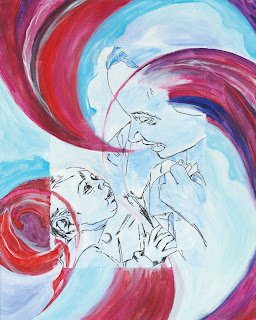
I mentioned at the beginning of worship this morning that, for 12 weeks, we will be hearing 12 different stories or resilience from Scripture. I don’t know about you, but I’ve been hearing the word - resilience - a lot over the past several months. This past week, I read a definition for this word in a Psychology Today article: Resilience is the psychological quality that allows some people to be knocked down by the adversities of life and come back at least as strong as before. Rather than letting difficulties, or traumatic events, or failure overcome them and drain their resolve, people who are resilient find a way to change course. To heal emotionally. And to continue moving forward.

In a related article I also read that people of faith are often more highly resilient. Because, in some ways, faith is synonymous with hope. Both faith and hope allow us to see a future beyond the present moment. But, it is faith that helps us more readily understand and accept that our present difficulties are part of the path to a better future. That’s the nature of faith. The nature of belief. To be able to see the connections between our present situation and the future. The opposite of this is disbelief. It's disbelief that led, in large part, to Sarah's laughter. Because, after all that had happened, after all she'd experienced, she was no longer able to see the future God had promised for her. And for Abraham. 

I wonder how many people in our world today lack this kind of faith. This belief in the future. And, really, is it any wonder that they do? Every day we are witness to a world that just seems to be struggling. To be hurting so deeply. Even to be falling apart. 

Or maybe it’s not just the world that seems to be so unsettled. Perhaps, we’re experiencing it in our own lives. An unexpected illness. Or a deep loss. Or even confusion about who we are and where we are at in our lives. Where it feels as though the future is so uncertain, so dark and cloudy. Or even, perhaps, when it feels as though there is no future. 

It is then - just as for Sarah - that, as one contemporary theologian puts it, it is then that our loving and relational God, the mysterious Trinity comes and invites us in. To abide in the holy. To admit the difficulties of the present. And the truth of what is unknown. To stop hiding behind false statements and facade of sureness. And to, once again, be reminded of the future God has in store for us. A future of abundance and wholeness. Of lives filled with hope and faith and love. And, especially, of lives that are full of laughter - the joyous laughter that comes from trusting God and living into the hope of that future God has promised for you and me, and for all people - a future given to us through the unexplainable presence and power of God, known as parent and Creator, as Word made flesh, and as life-giving Breath. 

Praise be to God! Amen.

Preached June 12, 2022, at Grace & Glory, Prospect, with Third, Louisville, and New Goshen Presbyterian, Prospect.
Holy Trinity
Readings: Genesis 18:1-15, 21:1-7; Psalm 116:1-2, 12-19


Sunday, September 15, 2019

God Creates Family: A Family Affair

The Lord appeared to Abraham at the oaks of Mamre while he sat at the entrance of his tent in the day’s heat. He looked up and suddenly saw three men standing near him. As soon as he saw them, he ran from his tent entrance to greet them and bowed deeply. He said, “Sirs, if you would be so kind, don’t just pass by your servant. Let a little water be brought so you may wash your feet and refresh yourselves under the tree. Let me offer you a little bread so you will feel stronger, and after that you may leave your servant and go on your way—since you have visited your servant.”

They responded, “Fine. Do just as you have said.”

So Abraham hurried to Sarah at his tent and said, “Hurry! Knead three seahs of the finest flour and make some baked goods!” Abraham ran to the cattle, took a healthy young calf, and gave it to a young servant, who prepared it quickly. Then Abraham took butter, milk, and the calf that had been prepared, put the food in front of them, and stood under the tree near them as they ate.

They said to him, “Where’s your wife Sarah?”

And he said, “Right here in the tent.”

Then one of the men said, “I will definitely return to you about this time next year. Then your wife Sarah will have a son!”

Sarah was listening at the tent door behind him. Now Abraham and Sarah were both very old. Sarah was no longer menstruating. So Sarah laughed to herself, thinking, I’m no longer able to have children and my husband’s old.

The Lord said to Abraham, “Why did Sarah laugh and say, ‘Me give birth? At my age?’ Is anything too difficult for the Lord? When I return to you about this time next year, Sarah will have a son.”

Sarah lied and said, “I didn’t laugh,” because she was frightened.

But he said, “No, you laughed.” --Genesis 18:1-15 (CEB)

When we left last week’s story, life was good!

We heard the story of the creation of the first family. The human family. Man and woman living in God’s garden - Eden - a word that means “beautiful.” Living in relationship with and caring for each other and God’s creation. And, particularly, living in relationship with God.

Life was good inside the garden!

Today, we move to life outside the garden. We experienced in our confession this morning how sin entered into that idyllic place, severing relationships. More has happened in between last week’s story and today. There’s been a big flood. The people built a tower seeking to make a name for themselves. God has called Abram and made a promise - that from Abram’s offspring, God will make a great nation, through whom the entire world will be blessed. 

God has continued to reinforce that promise a few more times, even changing the names of Abram and his wife, Sarai, to Abraham and Sarah - marking the beginnings of their new life. And the new story that God is now writing - a story of a peculiar people. Peculiar meaning “special.” A people through whom God intends to bless all humanity. And, especially, a people through whom God will restore the broken relationships that sin has caused.

But, there is a problem. We learn two chapters before today’s story that Sarah is barren. It must seem like a cruel joke. Because to be barren in a world where, for women, everything depends upon your ability to have children. And for God to promise that this new people would come from Abraham and Sarah. It must seem like such a cruel joke. And hard to believe.

It’s so hard for Sarah to believe that she arranges for Abraham to sleep with her servant Hagar, who then conceives and has a son, Ishmael. But, instead of resolving the problem, things become worse. Sarah becomes jealous of Hagar. And Hagar throws her newfound importance in Sarah’s face. 

It must seem like such a cruel joke. 

Then, in the chapter before today’s story, God comes to Abraham once more. Abraham is now 99 years old. God comes to him and once more promises that he and Sarah will have a child. At 99! When neither of them have the physical capabilities left to make such a child, much less the desire. When their relationship must feel so broken. When the waiting has seemed so fruitless. Yet, God continues to promise Abraham that he and Sarah will have a child. And Abraham falls to the floor in laughter. 

It must seem like such a cruel joke.

As our story opens today, Abraham is sitting in the shade under the trees at Mamre. Mamre was the first place Abraham landed in Canaan. Where he pitched his first tent in the land God had promised him. Where he built his first altar to worship God. So, Mamre was not only a dwelling place for Abraham. It was also a religious place. 

As Abraham is resting in the shade of the oak trees, he sees three men - three strangers - passing by. He jumps up and runs from the entrance to his tent to greet them. To show them hospitality. To travel in these places was dangerous. One was completely reliant upon the hospitality of strangers. Hospitality was central to life in Canaan. So, Abraham approaches the three strangers and invites them to join him under the cool shade. To wash their feet. To rest. And to have a little something to eat.

They accept his offer. And Abraham gets to work. Well, actually, it’s a servant boy and Sarah who get to work. Abraham goes to Sarah and tells her to prepare three seahs of the finest flour to make bread. A little something to eat? More like 30 loaves of bread.

Abraham then catches a young calf. The best meat available. Veal. Gives it to a young servant boy and tells him to prepare it. Then, takes the prepared meat, the bread, butter and milk and serves it to his guests.

As they eat, they say to him, “Where’s your wife, Sarah?” Not, “Where’s your wife?” but “Where’s your wife, Sarah?” This seems odd. How is it that complete strangers know Sarah’s name? As the audience to this story, we’ve already been clued in to the divine nature of these strangers. But, there’s no indication that Abraham knows. Yet, with this one question, it begins to dawn on Abraham that these are no ordinary passersby. 

When Abraham tells them that Sarah is right here in the tent - not visible, but present, one of them says that next year, he will return and, by then, Sarah will have given birth to a son.

It’s interesting, isn’t it? How Sarah is the subject of this conversation, but not present. How she is the center of this conversation, but placed on the edge of it. 

When this stranger, whom we now know to be divine, whether it is God or a messenger of God - when this stranger foretells Sarah’s future, she laughs. Behind the flap of the tent door, where she’s been listening in on this strange conversation, hearing her name, which might have been the first thing to catch her attention. When she hears what the stranger says, she laughs. But, this isn’t a joy-filled laugh. This is a cynical laugh. She is 90 years old. Abraham is 100. She has been barren all her life - a barrenness that has harmed her relationship with Abraham and with members of her own household. She has waited and waited for this son promised by God. Waited and waited as she’s grown old and has been pushed further and further to the edges of society, as we so often do with those who are barren. Who are old. Who don’t seem to have any life left in them. When she hears what the stranger says, she laughs. 

Because, it has been a cruel joke. Almost a lie. A promise that God hasn’t kept. 

What are the cruel jokes in your lives? The barren places that cause you heartache and sadness? The parts of your life that seem like such a lie. Promises by God that you’ve believed in. Perhaps it's the barrenness of relationships - the loss of relationship in so many different ways with those we love. Perhaps the cruel joke of life itself, of growing old, as we gray and are pushed to the edges of a world that values youth. Devalued, when we should instead be valued for our wisdom and our life experience. Perhaps it's the life of riches - that if we only had more money and stuff we’d be happy. Yet, finding out that the more we accumulate the more empty we feel. 

What are the cruel jokes in your lives? The barren places? The lies in your life? The promises that it seems God has not kept and that too much time has passed for them to be kept? Where in your life do you cover these parts up - like Abraham and Sarah - with cynical laughter? Where in your life do you lack hope?

Well, for Abraham and Sarah, we find it just a few chapters later, in chapter 21.  

The Lord was attentive to Sarah just as he had said, and the Lord carried out just what he had promised her. She became pregnant and gave birth to a son for Abraham when he was old, at the very time God had told him. Abraham named his son—the one Sarah bore him—Isaac. Abraham circumcised his son Isaac when he was eight days old just as God had commanded him. Abraham was 100 years old when his son Isaac was born. Sarah said, “God has given me laughter. Everyone who hears about it will laugh with me.” She said, “Who could have told Abraham that Sarah would nurse sons? But now I’ve given birth to a son when he was old!” --Genesis 21:1-7 (CEB)

It’s like God’s checklist, isn’t it? The Lord heard Sarah. Check. The Lord carried out what the Lord had promised. Check. Sarah became pregnant. Check. She gave birth to a son for Abraham when he was very old at the very time God had told him. Check. Then, Abraham named his son - the son borne to him by barren Sarah - Isaac. Check. Isaac - meaning laughter. Not the cynical laughter of before, but laughter that is filled with joy. With hope. Check.

Sisters and brothers, God has made the same checklist for you and I. While life may feel at times like a cruel joke, God hears us and is at work in God’s own time, checking things off that list. Restoring and redeeming us in Christ. Check. Calling each of us and naming us as God’s own. Check. Calling us back when we stray. Check. Working life out of death. Hope out of despair. A future out of the barren places. Check.

“For I know the plans I have for you,” declares the Lord, “plans to prosper you and not to harm you, plans to give you hope and a future.” 

In the barrenness of our lives, may we believe God’s promises, just like Abraham and Sarah. And may we trust that out of these empty places, God will bring us laughter that is filled with joy. Amen.

Preached September 15, 2019, at Grace & Glory Lutheran Church, Goshen, KY.
Pentecost 14.
Readings: Genesis 18:1-15, 21:1-7; Mark 10:27

Sunday, May 5, 2019

Cultivating Laughter, Song, and Dance (Letting Go of Being Cool and “Always in Control”)

When the Lord changed Zion’s circumstances for the better,
    it was like we had been dreaming.
Our mouths were suddenly filled with laughter;
    our tongues were filled with joyful shouts.
It was even said, at that time, among the nations,
    “The Lord has done great things for them!”
Yes, the Lord has done great things for us,
    and we are overjoyed.

Lord, change our circumstances for the better,
    like dry streams in the desert waste!
Let those who plant with tears
    reap the harvest with joyful shouts.
Let those who go out,
    crying and carrying their seed,
    come home with joyful shouts,
    carrying bales of grain! Psalm 126 (CEB)

Grace and peace to you from the Holy and Blessed Trinity: Creator, Redeemer, and Sustainer. Amen.

Have you ever been in a really hard place in your life that suddenly turned around? Where you were struggling and struggling and, then, all of a sudden the path was made clear for you? That’s how we find things in tonight’s psalm. It opens with a look back to a difficult time in Israel’s history. To a hard circumstance. A moment of remembering. Scholars believe this psalm was written after the Babylonian exile. After the northern kingdom had been exiled. After the temple in Jerusalem had been destroyed. After the southern kingdom - Judah - was taken into exile.

But, this psalm is not actually about the exile. Instead, its focus is on the surprising turnabout of Judah’s fate. Of a people in exile. Suddenly freed from exile by the Persians - by Cyrus the Great - and restored to their homeland.  Psalm 126 is a pilgrimage song. It’s a psalm about the journey. A journey out of exile and disorientation. To a place of home and reorientation. This model of orientation - disorientation - reorientation is one created by Old Testament theologian Walter Brueggemann. It’s a model that fit Israel’s communal experience. It’s also a model that fits well for our lives. And for those times when things seeming to be humming along - a place of orientation. Then everything falls apart - that’s the disorientation. Then, just when we are at what feels like the very bottom, suddenly things turn around. They are restored. Not the same as what they were, but in a new way. In a reoriented way.

So, what’s our reaction, when everything turns around? When everything's made new again? When everything seems to work out? If we look at Scripture and, particularly, Psalm 126, we see a typical human response. “Our mouths were suddenly filled with laughter; our tongues were filled with joyful shouts.” Think of Miriam at the edge of the Red Sea when Israel had been saved from the coming Egyptian army. Or of Mary at the birth of Jesus after finding out she was an unwed mother. Our human response is to laugh. To sing. To dance.

There is something about laughter and song and dance that shouts “life,” isn’t there. Barbara Ehrenreich in her book, Dancing in the Streets, documents the importance of engaging in what she calls “collective ecstasy.” She writes that we are “innately social beings, impelled almost instinctively to share our joy.”  And Brene Brown, after analyzing her research on shame for a couple years, learned that “laughter, song, and dance create emotional and spiritual connection; they remind us of the one thing that truly matters when we are searching for comfort, celebration, inspiration or healing: We are not alone.”

What makes you laugh? Perhaps it’s hearing a funny joke. Or watching your children or grandchildren do silly things. It’s not a laughing at, but a laughing with. What Brown calls a “knowing laughter.” It’s the kind of laughter that connects us. That comes from the power of sharing our lies and our stories with others. What makes you laugh? 

What makes you sing? When you hear a particular song on the radio, does it ever feel as though you’re right back to the first time you heard it? There are many songs on the soundtrack of my life. There is a whole playlist of Taylor Dane songs that, whenever I hear one of them, I’m immediately taken back to my early 30’s and a crazy, head-over-heels infatuation. What’s the soundtrack of your life? 

And, then, there’s dance! Perhaps dancing is the hardest because there is no other form of self-expression that can make us feel more vulnerable. Dancing is about full-body vulnerability. Have you ever watched a toddler dance? Writer Mary Jo Putney writes that what we love in childhood stays in our hearts forever. If this is true, then, dance stays in our heart even when our head tells us we should worry about what other people think.

And, that’s really the problem, isn’t it? Full-throated laughter, singing at the top of our lungs, and dancing with complete abandon require absolute vulnerability. And a lack of concern for what anyone else thinks.  As we mature and are socially conditioned, we limit this vulnerability. We learn that we are to be cool and “always in control.” We do this because we want to feel good enough. Because we feel as if we don’t measure up. That we aren’t good enough. We feel shame.

Yet, all we need do, like the psalmist, is look back. To look back at God’s response to our shame and our sin. How God, in Christ, has destroyed it. And how God, in Christ, has brought about resurrection. And continues to bring about resurrection. And new life. Constantly moving us from disorientation to reorientation. To a new place. 


May God help us to let go of fear and judgment and the feeling that we are all alone. May God lead us to cultivate courage, compassion, and connection. May God transform us into wholehearted people. Into shalom people. That we might experience all the laughter, song, and dance that God desires for us. And for all people. Amen.

Preached April 10, 2019, at Grace & Glory Lutheran Church, Goshen, KY.
Midweek Lent Worship
Reading: Psalm 126

Sunday, April 8, 2018

Good News Spreads: Believing

When it was evening on that day, the first day of the week, and the doors of the house where the disciples had met were locked for fear of the Jews, Jesus came and stood among them and said, “Peace be with you.” After he said this, he showed them his hands and his side. Then the disciples rejoiced when they saw the Lord. Jesus said to them again, “Peace be with you. As the Father has sent me, so I send you.” When he had said this, he breathed on them and said to them, “Receive the Holy Spirit. If you forgive the sins of any, they are forgiven them; if you retain the sins of any, they are retained.”

But Thomas (who was called the Twin), one of the twelve, was not with them when Jesus came. So the other disciples told him, “We have seen the Lord.” But he said to them, “Unless I see the mark of the nails in his hands, and put my finger in the mark of the nails and my hand in his side, I will not believe.”

A week later his disciples were again in the house, and Thomas was with them. Although the doors were shut, Jesus came and stood among them and said, “Peace be with you.” Then he said to Thomas, “Put your finger here and see my hands. Reach out your hand and put it in my side. Do not doubt but believe.” Thomas answered him, “My Lord and my God!” Jesus said to him, “Have you believed because you have seen me? Blessed are those who have not seen and yet have come to believe.”

Now Jesus did many other signs in the presence of his disciples, which are not written in this book. But these are written so that you may come to believe that Jesus is the Messiah, the Son of God, and that through believing you may have life in his name.  John 20:19-31 (NRSV)

Grace and joy to you from our Lord and resurrected Savior, Jesus Christ. Amen.

Welcome to Holy Hilarity Sunday! Or as it is also called - Holy Humor Sunday. Or also - Bright Sunday. This is a tradition from the early church on this second Easter Sunday (There are seven Easter Sundays in this season!). After the grandeur and celebration of the first Easter Sunday, this is the Sunday in which we revel in the hilarity of God’s action--the resurrection as the last laugh of God’s over the devil. 

It is also, traditionally, the Sunday when we hear the Thomas story. Or “Doubting Thomas” as he has been nicknamed. So, thinking of both Thomas and Holy Hilarity Sunday, I went online searching for any jokes about Thomas.

Do you know that I couldn’t find any? Or, at least, not any that were good jokes. The best i found was this cartoon, where Thomas is frustrated with the other disciples…”All I’m saying is we don’t call Peter “Denying Peter” or Mark “Ran away naked Mark.” Why should I be saddled with this title?” And, then, the response, “I see your point, Thomas. But really, it’s time to move on.” 

Not funny!

So, then, I decided to search for different artist’s renditions of Thomas. I was pretty amazed at the volume of art that depicts the scene we heard in our reading this morning. This classic painting by Caravaggio. Or another by German Martin Schongauer. Or here’s one by another German, Emil Nolde--on the the first Expressionist painters. Or here’s one from contemporary Russian artist Andrey Skorodumov. Or another contemporary--Chinese artist James He Qi. And, then, finally, John Granville Gregory, who does a contemporary version of the classic by Caravaggio. 

As I looked at this different artistic interpretations of today’s gospel, I was particularly struck by their similarities. Do you see it? In each painting, every artist has captured Thomas’ need to experience the resurrected Jesus. Whether it is touching the wound on his side or viewing the nail holes in his hands, Thomas needs his own experience with the resurrected Jesus.

To have his own experience.  Have you ever had a friend say to you, “You’ve got to see this!”? Maybe it’s a movie they’re ranting about. Or a particular product. Or maybe it’s to see the sunset from this particular spot. Whatever it is, your friend comes to you and is enthusiastic about it. Even a little over-enthusiastic. To the point that maybe you begin to doubt it a little. Or to wonder about what is real and what is hype. It’s not that you don’t believe your friends experience, but more that you don’t have anything to compare to it yourself. You haven’t experienced it. And, so, to be able to offer your own testimony of the greatness of the movie, or the product, or the sunset, or whatever it is, you need to have your own experience. Just like Thomas.

The Gospel writer knows this. And writes in this pattern throughout John. Where someone hears about Jesus and needs more information. And, then, they receive what they need to come to their own experience of the life that Jesus is embodying. 

Remember Nathanael, our earliest example. “Can anything good come out of Nazareth?” Or the woman at the well. “Sir, you have no bucket and the well is deep. Where do you get that living water?” Or the man born blind. Or Mary Magdalene on the first Easter morning: “Sir, if you have carried him away, tell me where you have laid him, and I will take him away.”

Each person who meets Jesus. Needing more information. So that they can have their own individual experience with him. 

I’d like to back us up a little in today’s story. In the section before the resurrected Jesus and Thomas meet, Jesus first appears to the rest of the disciples on the evening of that first Easter. He appears in the midst of them and offers them a blessing, “Peace be unto you.” Peace meaning shalom. That word from the Hebrew scriptures that connotes more than just peace, but a wholeness. A state of completeness. 

Jesus then shows them his hands and his side. They have their own experience with Jesus. An experience that brings them much joy. And, probably, a lot of laughter, too. Then, Jesus once again offers them a blessing of peace. And commissions them: “As the Father has sent me, so I send you.” Jesus then breathes on them. In the Hebrew, ruach. That breath of God. The Holy Spirit. “Receive the Holy Spirit. If you forgive the sins of any, they are forgiven them; if you retain the sins of any, they are retained.”

There’s something interesting about this last sentence. Verse 23 in chapter 20. The phrase “the sins of” are not there in the original Greek. For years, translators have just assumed that these words are assumed. That they match the pattern of the first phrase--”if you forgive the sins of any.” But more recent scholarship has begun to question this assumption.  That perhaps these words should be assumed. 

So, what happens if we take the assumed phrase out? How does that change the meaning of this sentence.

In the closest verbatim translation, it would read like this “Of whomever you forgive the sins, they [the sins] are forgiven to them; whoever you hold fast [meaning embrace], they are held fast.

Or, to make it more understandable, “If you forgive the sins of any, they are forgiven. If you hold fast to someone, they are held fast.”

If you hold fast to someone, they are held fast. This is what Jesus does for Thomas. He holds him fast. It’s what Jesus did for Nathanael, for the woman at the well, for the blind man, for Mary Magdalene, for the disciples in fear behind locked doors on that Easter evening, and for nearly every other character introduced to us in John, Jesus holds them fast through their doubt, or their fear, or their partial understanding or whatever else it is until they receive what they need to believe. Until they experience what they need for faith. This is what Jesus has been doing throughout John’s gospel. Holding each person fast until he or she has their own experience of belief.

And, when Jesus breathes the Holy Spirit onto the disciples, Jesus is making is possible for them to continue his work. To continue his work of “holding fast” onto those “who have not yet seen.” “Holding fast” to others along with the accompanying work of forgiving sins.

This, my friends, is what we are called to do in this place. In the midst of our doubt. Or our fear. Or our grief or our anger, we are called to hold fast to each other. To embrace and share in that brokenness. Because it is there, in the brokenness, in the embrace, in the holding fast, that God enters in. That God is incarnated within us. In, with, and under. God enters in, kills our brokenness and brings new life. Wholeness. Shalom. God brings life out of death. God resurrects us. Just like Jesus. And just like Thomas.

Knock, knock.
Who’s there?
Holly.
Holly who?
Hollylujah, Christ is risen!
Christ is risen indeed. Alleluia!

Amen.

Preached April 8, 2018, at Grace & Glory Lutheran Church, Goshen, KY.
Easter 2

Readings: Psalm 145:13-21; John 20:19-31.

Sunday, June 18, 2017

Divine Comedy

The Lord appeared to Abraham by the oaks of Mamre, as he sat at the entrance of his tent in the heat of the day. He looked up and saw three men standing near him. When he saw them, he ran from the tent entrance to meet them, and bowed down to the ground. He said, “My lord, if I find favor with you, do not pass by your servant. Let a little water be brought, and wash your feet, and rest yourselves under the tree. Let me bring a little bread, that you may refresh yourselves, and after that you may pass on—since you have come to your servant.” So they said, “Do as you have said.” And Abraham hastened into the tent to Sarah, and said, “Make ready quickly three measures of choice flour, knead it, and make cakes.” Abraham ran to the herd, and took a calf, tender and good, and gave it to the servant, who hastened to prepare it. Then he took curds and milk and the calf that he had prepared, and set it before them; and he stood by them under the tree while they ate.

They said to him, “Where is your wife Sarah?” And he said, “There, in the tent.” Then one said, “I will surely return to you in due season, and your wife Sarah shall have a son.” And Sarah was listening at the tent entrance behind him. Now Abraham and Sarah were old, advanced in age; it had ceased to be with Sarah after the manner of women. So Sarah laughed to herself, saying, “After I have grown old, and my husband is old, shall I have pleasure?” The Lord said to Abraham, “Why did Sarah laugh, and say, ‘Shall I indeed bear a child, now that I am old?’ Is anything too wonderful for the Lord? At the set time I will return to you, in due season, and Sarah shall have a son.” But Sarah denied, saying, “I did not laugh”; for she was afraid. He said, “Oh yes, you did laugh.”


The Lord dealt with Sarah as he had said, and the Lord did for Sarah as he had promised. Sarah conceived and bore Abraham a son in his old age, at the time of which God had spoken to him. Abraham gave the name Isaac to his son whom Sarah bore him. And Abraham circumcised his son Isaac when he was eight days old, as God had commanded him. Abraham was a hundred years old when his son Isaac was born to him. Now Sarah said, “God has brought laughter for me; everyone who hears will laugh with me.” And she said, “Who would ever have said to Abraham that Sarah would nurse children? Yet I have borne him a son in his old age.” Genesis 18:1-15; 21:1-7 (NRSV)


Grace to you and peace from God our Father and the Lord Jesus Christ. Amen.


Welcome to Ordinary Time. Or this liturgical season we also call “Time after Pentecost.” It’s a season we mark with green. Green paraments. Green stoles. Green banners. Green, a color that signifies growth. When lawns are growing. Gardens are growing, Crops are growing.

There’s growth in the church, too.

Our texts from the Gospel of Matthew go on for several weeks to explain to us what discipleship means, how we grow in our faith and how we grow in our response to God’s grace.

In our readings from the Old Testament (or Hebrew scripture) during this Ordinary time, we have two patterns to choose from. The first is a series of texts that are selected to complement the Matthew readings. The second pattern--the one we’ll be following over the next 12 weeks--tell us of the family stories of Abraham. Of God’s call to Abraham and covenant with him. It is these stories that will be the focus of my preaching. And, hopefully, the focus of your further study and thought at home.

We don’t often hear these stories. And so, this is an opportunity for us to dig deep into them. Some of us may have never heard these stories. For others, it may be the first time since childhood. Nevertheless, this is an opportunity for us to learn of Abraham and Sarah, and to see how God worked in their lives and, perhaps, envision how God might work in ours.

So, let’s begin.

Well, almost.

I say that because our story today doesn’t actually start at the beginning of Abraham’s story. Through a quirk in the liturgical season this year, we’ve lost a few chapters of the story.

We’ve missed God’s call to Abraham and his family to move from Ur in Mesopotamia down to Canaan. Seemingly, out of the blue, God calls Abraham to move away from his homeland, away from his family, away from his father’s household. And to make a long journey. Away to a place that is culturally foreign to him.

One of the things I’ve found interesting since moving here is how deep-rooted many families are in this state. Going back for generations. A few weeks ago I was talking to a family at the pantry--the Preston family, of the Preston Plantation in Trimble Co.. This family has lived in Kentucky for generations.

God’s call to Abraham to move from Ur to Canaan would have been like a call for the Preston’s to move from Bedford to Boston, Massachusetts. To a land completely different. Away from their family and their roots. To a place culturally foreign to them.

With God’s call, though, came a promise. A threefold promise. God promised to make of Abraham a great nation. God promised that Abraham’s name would be respected for generations. And God promised to bless him so that he could be a blessing to all the families of the earth.

And, so, they set out. Abraham, Sarah, and Lot, Abraham’s nephew. Eventually, they made it to Canaan. At first, they didn’t settle down. They lived a rather nomadic life, moving down to Egypt, then up to southern Canaan, and a few more places in between. And, also, in between, Abraham and Lot decided to go their separate ways.

After a while, Abraham and Sarah arrived in Hebron. It was there, in Hebron, located between the Dead Sea and the Mediterranean, that they settled. In Canaan. Near--as our story reads--near the “oaks of Mamre.”

Time passed. Abraham and Sarah were getting on in years. And still, no children. The promise from God that they were the beginning of a great nation hung over them. So, they decided to take things into their own hands.

We have a tendency as human beings to do that, don’t we? We become impatient. Or we seek to control our circumstances. Or even to control God and God’s promises.

Abraham and Sarah were no different that we. They developed a plan. Abraham decided that his chief servant, his head of household, would become his heir.

God’s response? “No, I don’t think so. That’s not what I promised you, Abraham. I promised you that you would have a son. A blood heir. And from this blood relative, I promised you would become a great people.”

So, Abraham and Sarah developed a second plan. Sarah offered her maid-servant, Hagar, to Abraham, so that Abraham could have a son who was of his own flesh and blood. And, that worked. For a moment.

Until God, once again, said, “No. This isn’t my plan for you. My plan is that you will have a son with Sarah.” Then, God renewed the covenant with Abraham. Promising, once again, that Abraham would be the father of nations. And calling for a visible mark, a reminder of this promise, upon every male in Abraham’s household.

Abraham’s response? Well, to the men in this room, if God came to you at age 99 and said you would be the father of many nations, what would your response be?
Yes. Abraham laughed. He was no different. Yet, even in the midst of his own doubt and cynicism, and the ridiculousness of God’s plan, he went along with it. And, he, along with all of the men in his household, was circumcised.
And Abraham and Sarah, once again, waited.

It is here, finally, that today’s story picks up. It open with the sentence, “The Lord appeared to Abraham at the oaks of Mamre while he sat at the entrance of his tent in the day’s heat.” In reading this, we know that God appeared to Abraham. Abraham, however, didn’t. At least, not initially.

What Abraham experienced that day, as he was sitting in his tent to get away from the heat of the day, three men approached him. He sees them and immediately runs to them to invite them in. Do you notice that Abraham goes out to them?

Then, Abraham shows deep hospitality to them.  It’s similar to the hospitality that I’ve experienced myself, both in Texas and here.

He brings his guests to the shade of the nearby trees. He brings them water to wash their feet and to drink and refresh themselves. And then he really opens the hospitality floodgates. He tells Sarah to prepare bread. And this isn’t any small amount. According to our story, he tells her to get 23 quarts of flour and make bread out of it. (That’s close to 25 loaves of bread.) And he tells his servant to kill one of the calves and to cook it.

Abraham then serves a sumptuous feast of veal and bread and butter and milk, and I’m sure there probably was a little wine in there, too.  It was amazing hospitality!

As they are eating, these three strangers reveal the purpose of their visit. It’s to announce that within the next year, Sarah, at around age 99, and Abraham, at around age 100, will have a child. A boy, named Isaac.

Now, Sarah, has not been present at this meal. She is not allowed there culturally. But, like any good wife, she’s listening in. And when she hears this announcement, she, like Abraham, laughs.

I put this proposition out to the WISE group on Thursday. I asked them how they might respond if God came to them and said that, at age 90 (I knocked down ten years!), they would get pregnant and give birth to a child.

They, laughed, too. Just like Sarah.

We are not that different from Abraham and Sarah. God promises these amazing things from inconceivable people and places and we laugh. Maybe it’s doubt. Maybe it’s cynicism. Maybe it’s because so often we make all of these great plans and everything just seems to fall apart.

But, it is there. In the midst of our cynicism. And our doubt. And our failed plans. And our laughter. It is there, that God steps in. Like some great divine comedy. God steps in and turns it all around to accomplish God’s purpose. Just like Abraham and Sarah. Just like us.


And, that, my friends, in this ordinary time, is anything but ordinary. Amen.

Preached June 18, 2017, at Grace & Glory Lutheran Church, Goshen, KY.
2nd Sunday after Pentecost
Readings: Genesis 18:1-15, 21:1-7; Psalm 116:1-2, 12-19; Romans 5:1-8; Matthew 9:35-10:8.


Sunday, April 23, 2017

Not the Same Anymore: The Last Laugh

But Peter, standing with the eleven, raised his voice and addressed them, “You that are Israelites, listen to what I have to say: Jesus of Nazareth, a man attested to you by God with deeds of power, wonders, and signs that God did through him among you, as you yourselves know— this man, handed over to you according to the definite plan and foreknowledge of God, you crucified and killed by the hands of those outside the law. But God raised him up, having freed him from death, because it was impossible for him to be held in its power. For David says concerning him,
‘I saw the Lord always before me, for he is at my right hand so that I will not be shaken;therefore my heart was glad, and my tongue rejoiced; moreover my flesh will live in hope.For you will not abandon my soul to Hades, or let your Holy One experience corruption.You have made known to me the ways of life; you will make me full of gladness with your presence.’“Fellow Israelites, I may say to you confidently of our ancestor David that he both died and was buried, and his tomb is with us to this day. Since he was a prophet, he knew that God had sworn with an oath to him that he would put one of his descendants on his throne. Foreseeing this, David spoke of the resurrection of the Messiah, saying, ‘He was not abandoned to Hades, nor did his flesh experience corruption.’This Jesus God raised up, and of that all of us are witnesses.
(Acts 2:14a, 22-32, NRSV)

Grace and peace from God, our Father, and from our resurrected Lord and Savior, Jesus Christ. Amen.

Welcome to Holy Hilarity Sunday!

Celebrating laughter and joy on this second Sunday of Easter is actually a long and very rich tradition in the church. There is quite a history of congregations celebrating this day, sharing jokes and fun stories, and engaging in pranks on each other.

The tradition arises from early theologians, where they reflected on the resurrection of Jesus from the dead as a huge practical joke that God played on Satan. They called it the risus paschalis, meaning the Easter laugh.

So, today, it seems especially appropriate for us to laugh and to have fun. To celebrate the pure joy of Easter in a fun way the week after we’ve celebrated it in a glorious way. To mix faith and humor and to stir them both deeply into our lives so that we might live more fully into being and sharing ourselves as joyful people of the resurrection.

This wasn’t always the case. This being joyful people of the resurrection. In those first hours and days after Jesus’ resurrection, even after Mary Magdalene had announced to the disciples that she had seen the Lord, laughter and joy and poking fun wasn’t necessarily on the minds of Jesus’ followers. They were afraid. They had gathered together in fear, not sure what would the authorities might do to them as possible accomplices to Jesus, this enemy of the state.

And, then, one can only wonder at what must have a level of bewilderment and disbelief and, yes, still fear, after hearing Mary’s announcement. Not knowing entirely what was happening. And whether what Mary told them was, in fact, true.

So, they continued to hide in fear behind locked doors.

It is there, in their fear and in their darkness, that Jesus seeks them out and meets them. Exactly where they are. Offering peace in place of fear. Offering assurance in the midst of their doubt.

It is at that point, after Mary’s witness to them and after they finally experience Jesus themselves that they, too, could fully experience joy.

But that wasn’t all there was to be. Because, it was at this point--after they had experienced the living and resurrected Jesus--that he sent them out on a mission. It is noted in our John text. It is also the story that precedes our text in Acts.

Did you hear that in both the John and Acts readings? That, before Jesus sent them out, he breathed into them the Holy Spirit?

It may seem weird to hear this at this point. Usually, from a liturgical standpoint, we reserve the outpouring (or inbreathing) of the Holy Spirit for Pentecost. And, yet, here we have it on the second Sunday of Easter--in our first reading, which is an extension of Peter’s sermon after the events of the Pentecost, after the Spirit has been poured out on the disciples gathered together, waiting. After they have begun to speak in the native languages of those listening. Even after those very listeners have begun to question the disciples’ legitimacy.
It is at this point that Peter stands up. And, just like Mary did, he witnesses. He connects the dots for them. He tells them everything that has happened and helps them to more fully understand what this means. That everything that has happened has been part of God’s plan. It’s not a second chance or God’s Plan B. It has been what God has intended for all time. That God would send God’s Son, proving to them through miracles and wonders and signs who Jesus was. That God knew that Jesus would be crucified. That God would raise him up. That God would free him from the “pain” of death. (This is the best translation for this phrase. And that the word used for pain is the same word associated with the pain of childbirth.) God would free Jesus from the “pain” of death by raising him up. It’s almost as though God was birthing a new world. Turning the world upside down. Is it any wonder then, if you remember our resurrection story from last week, that it began with an earthquake?

With Christ’s resurrection, God disrupts the world.  It is not the same anymore.

This is what happens when God disturbs business as usual. Nothing is the same anymore. This is what the gospel does. It tells the story of God bringing something new into being, something that challenges the “world,” the way things are. It is the same disruption that happens when the Gospel is preached. When we, just like Mary and Peter, witness to the Good News. Because it is then that Jesus appears and is experienced and nothing is the same anymore.

Over these weeks of Easter, this is what we will be looking at. Each week for six weeks, we will be looking at the Acts texts, which during Easter, will replace in our readings that from the Hebrew scripture. We will see how, in hindsight, God’s people witness how God disrupts the world. How God intrudes. We will see what it means for Jesus’ followers and for us to share this witness. We will watch and learn right along with those characters who inhabit the pages of Acts. That second half of the Luke gospel that begins by fixing all of our attention and expectation upon God, even as we see that people will also play a part in God’s objectives. We will see how they respond, as people who watch for God’s lead. Not as puppets, but as God’s agents, prompted to tell what they have seen. To report and to share evidence of the new realities that God has brought about through Jesus. New realities that are rooted in the past, that exist in present realities, and that connect us to the future by pointing toward the salvation that God will ultimately accomplish.

And, perhaps, just perhaps, in our listening and learning, we, here at Grace and Glory, might discover--or rediscover--the availability of God’s salvation or God’s commitment to renew and restore right here in Goshen, Kentucky. That we might see, in our midst, our resurrected Lord present, welcoming us into a new life, a resurrected life. A life of joy and laughter, a life of love and freedom, a life of peace and wholeness, a life together with him as part of the body of Christ.

That is the reality of our experience of a salvation from a disruptive God, for whom, with the resurrection nothing will ever be the same anymore. That is the basis for our joy. That is the basis for our laughter. That is why we celebrate Holy Hilarity Sunday.


And that is why we, and not death or the devil, have the last laugh.


Amen.

Preached April 23, 2017, at Grace and Glory Lutheran Church, Goshen, KY
Second Sunday of Easter
Readings: Acts 2:14a, 22-32; Psalm 16; 1 Peter 1:3-9; John 20:19-31

Wednesday, April 20, 2016

Drumstick Ice Cream Cones

John 20:19-31 (NRSV). When it was evening on that day, the first day of the week, and the doors of the house where the disciples had met were locked for fear of the Jews, Jesus came and stood among them and said, “Peace be with you.”After he said this, he showed them his hands and his side. Then the disciples rejoiced when they saw the Lord. Jesus said to them again, “Peace be with you. As the Father has sent me, so I send you.” When he had said this, he breathed on them and said to them, “Receive the Holy Spirit. If you forgive the sins of any, they are forgiven them; if you retain the sins of any, they are retained.” But Thomas (who was called the Twin), one of the twelve, was not with them when Jesus came. So the other disciples told him, “We have seen the Lord.” But he said to them, “Unless I see the mark of the nails in his hands, and put my finger in the mark of the nails and my hand in his side, I will not believe.”


A week later his disciples were again in the house, and Thomas was with them. Although the doors were shut, Jesus came and stood among them and said, “Peace be with you.” Then he said to Thomas, “Put your finger here and see my hands. Reach out your hand and put it in my side. Do not doubt but believe.” Thomas answered him, “My Lord and my God!”Jesus said to him, “Have you believed because you have seen me? Blessed are those who have not seen and yet have come to believe.” Now Jesus did many other signs in the presence of his disciples, which are not written in this book. But these are written so that you may come to believe that Jesus is the Messiah, the Son of God, and that through believing you may have life in his name.


Welcome to this Sunday, April 3rd, only 2 days after April Fool's Day. One day isn't enough, is it? For me, one day of jokes just isn't enough. You see, in my family, we didn't celebrate just one day. I come from a family of people who love to laugh and play practical jokes on each other.  So, that first day of April often dragged into three, frequently a week and, sometimes, up to a full month.  One of us would play a joke on another which led to the need to reciprocate and on and on and on.

So, today it just seemed right to play an April Fool’s joke on you.  It also seemed right because, in my home parish in Pasadena, this Sunday, the Second Sunday of Easter is always celebrated as Holy Hilarity Sunday.  A Sunday where we are invited to bring jokes -- respectful jokes, of course -- to share, and to laugh with each other.

Celebrating laughter on this second Easter Sunday is actually a long and very rich tradition in the church.  There is much history of congregations celebrating this day, sharing jokes and fun stories and engaging in pranks on each other.  The tradition comes from some of the church’s early theologians, where they reflected on Jesus’ resurrection from the dead as a huge practical joke that God played on Satan.   They called it the risus paschalis, meaning the Easter laugh. 

And, so, it seems very appropriate today for us to laugh.  For us to celebrate the joy of Easter in a fun way the week after we’ve celebrated it in a glorious way.  To mix faith and humor and to stir both deeply into our lives so that we might live more fully into being and sharing ourselves as people of the resurrection.

I think God must have an amazing sense of humor.  After all, look at the characters, in the Bible and here in this congregation, who God has gathered together as his people.  From those in the Hebrew scripture, to the disciples of Jesus, to us here today, God has a way of finding very imperfect people and forming and shaping all of us into people very well-suited to do the Church’s work--the work of sharing the good news of that Easter resurrection.

Notice that I used the word “imperfect.”  Often, I think that we get this notion in our heads that, in order to share the Gospel, you must have led a perfect life.  That, to be called, one must have lived in a way that is completely faithful and above reproach.  Well, I, for one, know better than that.  And all one needs to do to further disprove that theory is to look at the characters--the imperfect characters--in our reading today.

Let’s look at the disciples.  That first Easter morning, we know that Mary, after discovering that the gardener was, in fact, Jesus, runs back to the disciples and announces to them that she had seen the Lord.  And, then, proceeded to share with them everything Jesus had said.   

And, their response?  Well, they hid!  They went behind closed doors and hid because they were afraid of the Jewish authorities.  Why?  The story doesn’t say.  Perhaps they thought they might be accused of stealing Jesus’ body so they could start rumors of his resurrection.  Or perhaps they were afraid to rejoice publicly--to show joy over Jesus’ resurrection and incur the wrath of the authorities.  Whatever it was, they were afraid and they hid.  And, my guess was that, as they hid away, there was not much laughing.  Until, of course, Jesus appeared and showed them the marks of his resurrection.  Only then were they filled with joy.  Only then did they actually come of out of their own tomb of fear and truly enter into the resurrection.

And, then, there’s Thomas.  Oh, poor Thomas.  You see, I kind of get Thomas.  He was the realistic one, wasn’t he?  He was evidence-driven.  He wanted proof.  He wanted facts.  "Prove it to me."  (Aren’t we all a little bit like him?  How do I know God exists?  Why would God allow something like that to happen?  We are always looking for the proof, for the facts, for the answers.) And, then, just like with the disciples, Jesus appears.  And tells Thomas to put his finger in his hands and his hands into his side.  Here, Thomas!  Here’s your proof!  

And Thomas, without even having to put his fingers into the nail holes or into the sword slice in Jesus’ side--without touching the actual proof, he gets it.  He gets Jesus’ resurrection and immediately confesses, “My Lord and my God!”  Out of his tomb of doubt and into the resurrection.

Aren’t we so like Thomas and the rest of the disciples?  You see, I think sometimes the immensity of the resurrection is way too much for us to fully grasp.  That it’s way too big for us to truly understand.  And so, piece by piece.  Bit by bit.  Just like with the disciples, Christ comes into our presence and, little by little, we enter into the resurrection, into our own resurrection from fear and doubt.

In February of 2008, my sister was dying.  She had fought cancer over a lifetime, but had reached a point where she was tired of fighting.  She was ready to die.  Ready to be reunited with Christ.  Over the six months that she was in and out of the hospital, I urged her on.  In the midst of my own fear and doubt at losing her and what life would be like without her, I urged her to continue to fight.  

When she made the decision to come home to my house on hospice, I was devastated.  But, I was also determined that those last days would be the best for her.  So, I asked her what she wanted to eat, what her favorite foods were.  All she wanted were Drumstick ice cream cones.  

Over the next 7 days, friends and family came to visit, to gather around her and cry and laugh and share stories of amazing memories we had together.  And all the while, we ate Drumstick ice cream comes--4 boxes of Drumstick ice cream cones to be exact!  In that week--in the sharing of stories and ice cream, I experienced Christ’s presence.  And my own resurrection.  A resurrection out of my own tomb of fear and doubt and into the hope and joy of the resurrection with the knowledge that, no matter what, Christ would continue to be present with me.

You see fear and doubt and joy and gladness often walk hand-in-hand with each other.  All we have to do is open the Psalms to see this.  Yet, in their midst, our resurrected Lord is present, welcoming us into a new life, a resurrected life.  A life of joy and laughter, a life of love and freedom, a life of peace and wholeness, a life together with him as part of the body of Christ.  That, my friends, is the joy of the resurrection.  That is the basis for our laughter.  

And that is the reason that it is we, and not death or the devil, who ultimately have the last laugh! 

Thanks be to God! Amen.

Preached on Sunday, April 3, 2016, at Chatfield Lutheran Church.