Showing posts with label possibility. Show all posts

Sunday, March 12, 2023

God's Power: The Power and Possibility of God's Reign

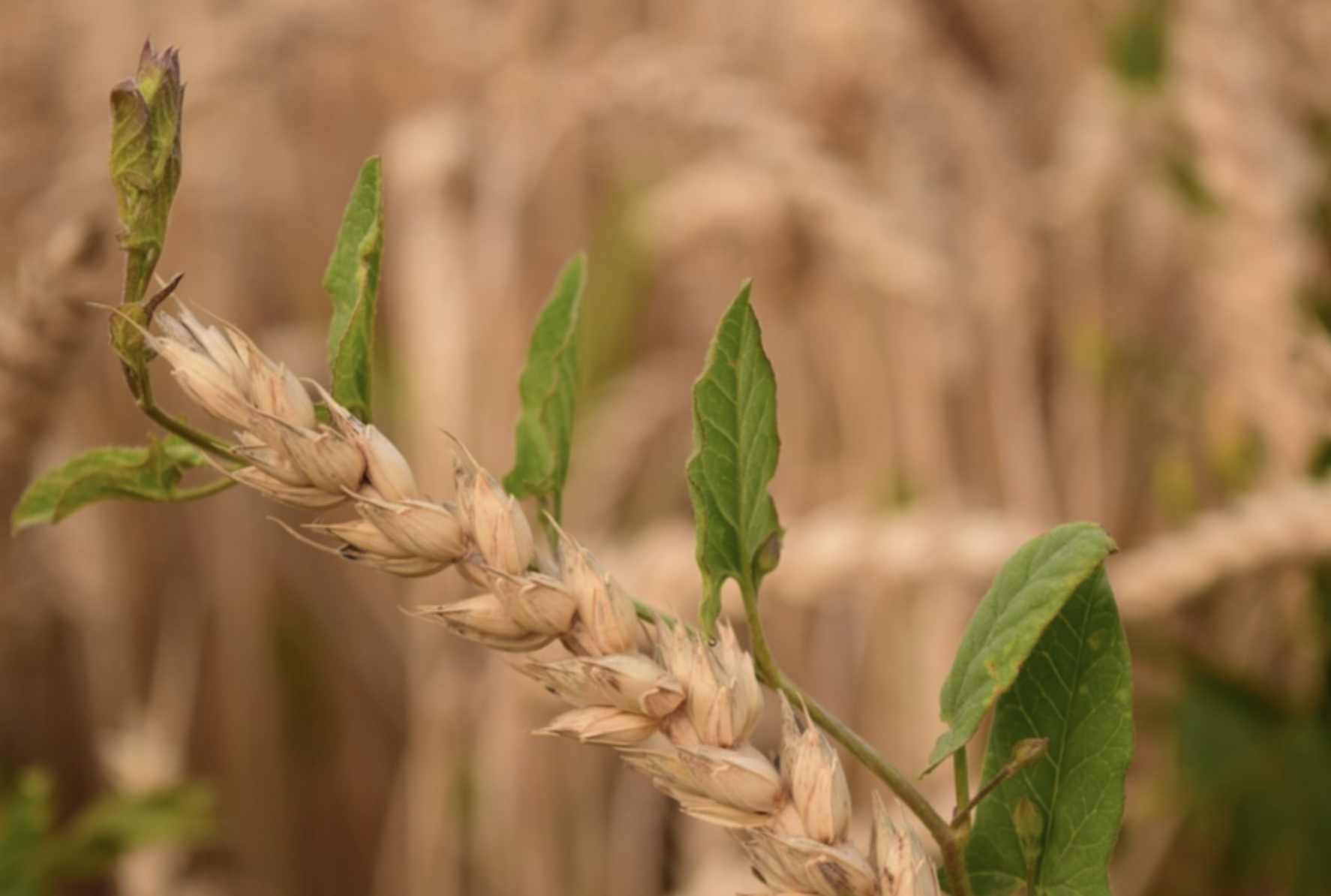
Jesus told them another parable: “The kingdom of heaven is like someone who planted good seed in his field. While people were sleeping, an enemy came and planted weeds among the wheat and went away. When the stalks sprouted and bore grain, then the weeds also appeared.

“The servants of the landowner came and said to him, ‘Master, didn’t you plant good seed in your field? Then how is it that it has weeds?’

“‘An enemy has done this,’ he answered.

“The servants said to him, ‘Do you want us to go and gather them?’

“But the landowner said, ‘No, because if you gather the weeds, you’ll pull up the wheat along with them. Let both grow side by side until the harvest. And at harvesttime I’ll say to the harvesters, “First gather the weeds and tie them together in bundles to be burned. But bring the wheat into my barn.”’”

He told another parable to them: “The kingdom of heaven is like a mustard seed that someone took and planted in his field. It’s the smallest of all seeds. But when it’s grown, it’s the largest of all vegetable plants. It becomes a tree so that the birds in the sky come and nest in its branches.”

He told them another parable: “The kingdom of heaven is like yeast, which a woman took and hid in a bushel of wheat flour until the yeast had worked its way through all the dough.”

Jesus said all these things to the crowds in parables, and he spoke to them only in parables. This was to fulfill what the prophet spoke:

I’ll speak in parables;
        I’ll declare what has been hidden since the beginning of the world.

Jesus left the crowds and went into the house. His disciples came to him and said, “Explain to us the parable of the weeds in the field.”

Jesus replied, “The one who plants the good seed is the Human One. The field is the world. And the good seeds are the followers of the kingdom. But the weeds are the followers of the evil one. The enemy who planted them is the devil. The harvest is the end of the present age. The harvesters are the angels. Just as people gather weeds and burn them in the fire, so it will be at the end of the present age. The Human One will send his angels, and they will gather out of his kingdom all things that cause people to fall away and all people who sin. He will throw them into a burning furnace. People there will be weeping and grinding their teeth. Then the righteous will shine like the sun in their Father’s kingdom. Those who have ears should hear.” --Matthew 13:24-43 (CEB)

I’d like to begin this morning by considering how we hear things. Specifically, depending on who we are or where we are, how we hear things may change. Context. Everything is about context.

Here’s an example. “Throw the book at someone.” Now, if I were a schoolteacher and I heard one of my students say that they were going to throw the book at someone, how might I hear this? How might I respond?

On the other hand, if I were in a courtroom, sitting at a defense table, and I heard the judge talk about throwing the book at someone, how might I hear that? How might I respond?

Today, we have these three parables about the reign of God. The basic meaning of the root of the word, parable, is hidden. Often, the message Jesus is trying to tell is hidden. Mysterious. He even says that in our text when he quotes Isaiah: I speak in parables. I’ll declare what has been hidden since the beginning of the world. Some consider parables to be subversive speech. That Jesus used scenes from everyday life to expose the contradiction between the actual situation of his hearers and the teachings of God’s justice. When I was in Sunday School, I was taught that a parable was an “earthly story with a heavenly meaning.” (Whatever that means!) However you want to consider them, parables are complicated. And, today, we have three of them: the parable of the wheat and the weeds. The parable of the mustard seed. The parable of the yeast. We don’t often hear them read altogether, yet that is exactly how they are placed in this thirteenth chapter of Matthew. One right after the other. Jesus moves from one parable to the next and, immediately, to the third. So, what does this mean? And what is he, through these parables, trying to say?

Again, I would suggest to you that context matters.

For example, if you were one of Jesus’ actual followers, you were likely a member of the bottom tier of society. By Jesus’ day, Israel had become part of the Roman Empire with the top tier of society, the elite of his day - including the ruler, the ruling class, those who did the empire’s bidding, priests, and, perhaps a few merchants - the elite whose primary focus was to maintain the status quo and plunder the wealth of the bottom tier of society, which included the peasants and farmers. So, from the viewpoint of the bottom tier of society, you would immediately get that something wasn’t quite right about these parables. What farmer, after all, would allow the weeds to remain beside the wheat? Or who would even want the mustard seed to grow - because it was considered an invasive plant that could do damage to good crops? Or who would mix yeast into the amount of flour identified in our text - an amount that, once baked into bread, would be the equivalent of 150 loves? Enough to feed an entire village. 

If you were one of Jesus’ listeners, you would begin to understand the upside-down nature of God’s reign. And, then, perhaps you would begin to question the nature of your world. Parables as subversive texts? Perhaps so.

Or consider if you were part of the audience to whom Matthew was writing in this gospel. The first parable might have been understood by your community as the reign of God in the world. That the separation from Israel is now complete and that you are part of the church beginning the Gentile mission. The world is now your field of endeavor, an opportunity for you, as part of Matthew’s community, to begin to bear fruit. 

Or consider if you were a follower of Origen, a third century early church father, who wrote that the parable of the wheat and the weeds was really about what was inside us. Or, to put it in a Lutheran framework - the wheat being the saint in us and that weeds being the sinner in us. 

Context matters. Where you are and who you are as you are reading these parables change their meaning. Which may be a little unsettling. Perhaps so.

But there are a few key understandings that, no matter who you are, where you are, or what time frame in which you are reading these parables, there are a few things we can notice universally about them. 

First. Notice in the parable of the wheat and the weeds who sows the seeds and who controls the reaping process. It’s neither you nor I.  But God.

Second. Notice in the parable of the mustard seed, the subversive nature of God’s reign. Notice, again, who plants the seed so small that it’s almost invisible, but that, through nurturing and care, grows into something large and beautiful that serves others, whether it's the birds of the air or the least among us. It all begins, once, again with God. 

Third. Notice that the parable of the yeast is really not about the yeast at all. It’s about the amount of flour that, along with such a small cake of yeast, can make so. Much. Bread. Such abundance that it can only be shared. An abundance that comes from God. And God alone.

This is what the reign of God looks like. Planted by God and leading to such great abundance, yet with a reminder that it is, once again, God and God alone who will create and grow and, ultimately, be the final arbiter of God’s justice. It is a reign initiated by Jesus, who affirms that it is both a present reality and a future hope. A now, but not yet. A reign that, like pregnancy, is mysterious, miraculous, comes with pain and urgency, and gives new life. A reign that pervades and transforms everything it encounters. A reign that, though we cannot see it fully now, has as its hallmarks, hospitality, generosity, and abundance.

So, whether you are part of Grace & Glory considering what the future may bring. Or whether you are a member of Third on the cusp of something bread new, may we all remember and hold fast to the truth that the reign of God is one of power and possibilities. And that we are called to come alongside and share. 

May we have ears to hear. Amen.

Preached Sunday, February 12, 2023, at Grace & Glory Lutheran, Prospect, with Third Lutheran, Louisville.
Sixth Sunday after Epiphany
Readings: Matthew 13:24-43; Psalm 84:1-7


Monday, July 18, 2016

Step Back and See the Possibilities

The Son is the image of the invisible God,
        the one who is first over all creation,
Because all things were created by him:
        both in the heavens and on the earth,
        the things that are visible and the things that are invisible.
            Whether they are thrones or powers,
            or rulers or authorities,
        all things were created through him and for him.
He existed before all things,
        and all things are held together in him.
He is the head of the body, the church,
who is the beginning,
        the one who is firstborn from among the dead
        so that he might occupy the first place in everything.
Because all the fullness of God was pleased to live in him,
        whether things on earth or in the heavens.
            He brought peace through the blood of his cross.

Once you were alienated from God and you were enemies with him in your minds, which was shown by your evil actions. But now he has reconciled you by his physical body through death, to present you before God as a people who are holy, faultless, and without blame. But you need to remain well established and rooted in faith and not shift away from the hope given in the good news that you heard. This message has been preached throughout all creation under heaven. And I, Paul, became a servant of this good news.
Now I’m happy to be suffering for you. I’m completing what is missing from Christ’s sufferings with my own body. I’m doing this for the sake of his body, which is the church. I became a servant of the church by God’s commission, which was given to me for you, in order to complete God’s word. I’m completing it with a secret plan that has been hidden for ages and generations but which has now been revealed to his holy people. God wanted to make the glorious riches of this secret plan known among the Gentiles, which is Christ living in you, the hope of glory. This is what we preach as we warn and teach every person with all wisdom so that we might present each one mature in Christ. I work hard and struggle for this goal with his energy, which works in me powerfully.  Colossians 1:15-29 (CEB)

Grace and peace to you God our Father. Amen.

This past week I was on vacation in Colorado. In fact, I was at a family reunion. My father had thirteen brothers and sisters. Every three years, our family, which is now into its fourth and fifth generations and numbers over 300, gathers together at some place in the U.S. to remember who we are and where we are from. It’s an amazing and moving time as we sit together and listen to the stories of our lives, of the lives of our parents and children, and of the lives of our grandparents and grandchildren.  This year we met for our reunion in the mountains of Colorado for five days. 

While we were there, I had the opportunity to see my niece, who I haven’t seen in a few years. She’s been busy with finishing college and starting work. I’ve been busy with school and internship and moving across country a few times. So, here in Colorado, we had a chance to catch up.

She’s quite a young woman. A mechanical engineer who graduated with honors from Cal-Poly. She has a great job with a start-up biomedical company in Southern California. She loves to hike and camp. And, she loves to tinker with machines. She has three motorcycles that she loves to mess with along with numerous other mechanical and electronic devices.

So, it seemed natural that, when she showed up at the reunion, she brought her new drone along with her. Now, I’ve only read about drones and watched them online. I’d never seen one in person or watched on in action. So, it was fascinating for me to see her operate this and to watch what it could do. 

Here’s an example of what it was able to do. Here, in this video, she was able to take a video of the members of our family who came to the reunion (by the way, this is only about half of my family!) and then to raise it up further into the sky and pan over the entire area where we were able to stay. We were able to see the setting first from a very small perspective and then to see it from a much larger, fuller perspective of the entire place. 

It is this video, taken by my niece from her new drone, that was helpful for me this week in thinking about our texts. 

Let’s first look at our Gospel lesson. I really don’t care for this story. Because it just seems to pit Martha against Mary and vice versa. It also seems to say to me that we have to choose one way of life over another--that a contemplative life is better than an active life of service. That Mary’s attention to Jesus’ teaching is better and more important than Martha’s work to be hospitable. 

But if, like the drone, I pull back and look at the bigger picture, I’m wondering if something different isn’t going on here, something I’ve never stepped back far enough to see from a fuller perspective. What Martha was doing was what was expected of her. She knew that guests were coming and so she got busy to make sure everyone had everything they needed. This is what was--and often still is--expected of women. It was work that was not just expected, but also valued. 

What wasn’t expected, though, is that Mary would take the position of a disciple, seated at the feet of Jesus, listening to him teach. If hospitality was considered women’s work, well, discipleship was considered men’s work. So, perhaps, the intent of this story is to push us out, to see a broader perspective, to see the possibility of something different, to see someone actually acting differently from what would have been expected or even allowed a woman to consider. Perhaps as Jesus repeats Martha’s name, he isn’t expressing frustration with her, but deep affection: “Martha, Martha, it is exactly because I love you that I don’t want you to be distracted or trapped by your work or your expected role, but instead to step back and see all that is possible for you, just as Mary has.” 

To step back and to see the possibilities. 

Perhaps we can take a lesson not only from Mary, but also from my niece’s drone.

To step back and to see the possibilities.

What if, for example, we were to step back and see the possibilities in the recent protests over the shootings in St. Anthony and Baton Rouge?  To not view them only from a close perspective, where they might seem out of control or disruptive or wrong. But to back up and take a broader view. To gain a bigger perspective. To see the possibility of these protests as transformative. That they might be the first step in an upsetting of societal structures that protect and elevate those of us with white skin over those of us who are people of color.  

Or what about the ways in which we deal with young Muslim men and women who go to Syria to fight with ISIS. What if we were to step back and look at the bigger picture? 

This is what crime prevention officers did in a small town in Denmark. On receiving reports of two young Muslim teenagers missing from an immigrant neighborhood outside their town, they, too, stepped back to gain a bigger perspective. After an investigation, they found out that these young men had gone to Syria. They had been drawn to the call put out by ISIS for Muslims worldwide to help build a new Islamic state. 

The police officers didn’t stop with this information, though. They stepped back and began to ask why this might be happening and what they might do to prevent radicalization.

Now most of the rest of the European countries came down hard on citizens who traveled to Syria. France shut down mosques it suspected of harboring radicals. The UK declared citizens who had gone to help ISIS enemies of the state. Several other countries threatened to take away their passports--a move previously reserved for convicted traitors.

But Danish police took a different approach. They made it clear that any citizens of Denmark who had traveled to Syria were welcome to come home and that, if they did, they would receive help with going back to school, finding an apartment, meeting with a psychiatrist or mentor, or whatever they needed to fully integrate back into society. In the process, they ended up creating an unusual--and unusually successful--approach to combating radicalization.

This program came to called the “hug a terrorist” program in the media, but this description doesn’t sit well with the cops. They see themselves as making an entirely practical decision designed to keep their city safe. From their perspective, coming down hard on young, radicalized Muslims will only make them angrier and more of a danger to society. 

To step back and see the possibilities. 

You see, that’s also the point of our Colossians text today. From a close-in perspective, it would seem impossible for an infinite, eternal God who exists outside of time to indwell in one human being who is mortal, finite and who dwells inside of time. 

Unless, of course, it isn’t. 

Unless, of course, we step back and see the possibilities.  See a new way that God was and is at work. As we read in verses 19-20...For in him all the fullness of God was pleased to dwell, and through him God was pleased to reconcile to himself all things, whether on earth or in heaven.

To step back and see the possibilities. To step back and see that, through the event of Christ, God has reconciled himself to all things--on earth and on heaven. That God is at work making a new reality. A new social system. A new creative order marked by peace and reconciliation. Salvation is not about the transformation of our existing reality--the defeat of enemy powers. Salvation is about a radical reconciliation of the entirety of the created order. Salvation here is not about God making an offer and waiting to see who takes it. Here, it is about God just doing it. About God turning all creation on its head and reconciling himself to it through Him in whom all of the fullness of God was pleased to dwell.

To step back and see the possibilities. And to imagine God in a way that we have never imagined God before.

May that be our lesson today.


Amen.

Preached Sunday, July 17, 2016, at Chatfield Lutheran Church.
Ninth Sunday after Pentecost (Year C)
Texts: Psalm 15, Colossians 1:15-29, Luke 10:38-42