Showing posts with label yeast. Show all posts

Sunday, March 12, 2023

God's Power: The Power and Possibility of God's Reign

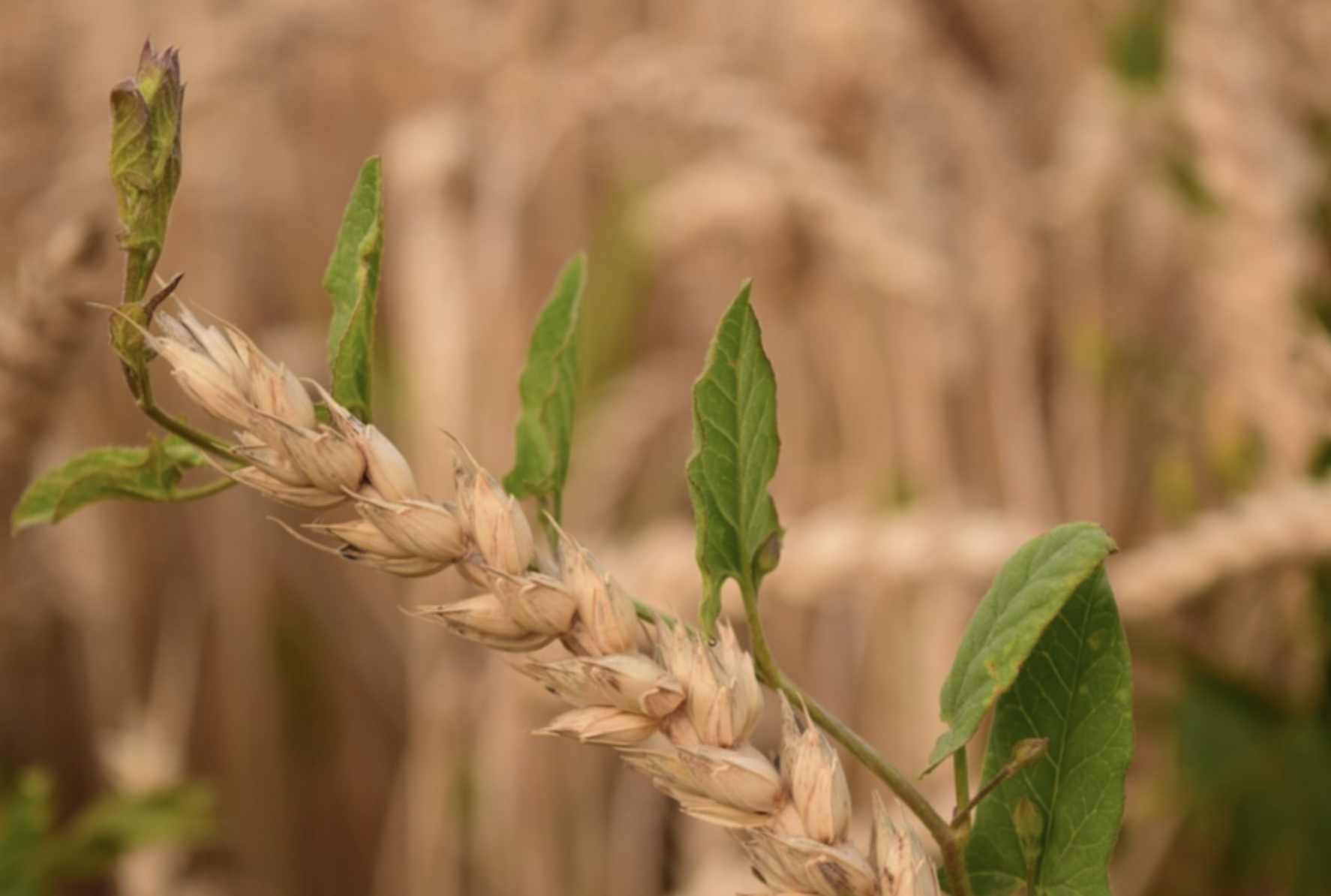
Jesus told them another parable: “The kingdom of heaven is like someone who planted good seed in his field. While people were sleeping, an enemy came and planted weeds among the wheat and went away. When the stalks sprouted and bore grain, then the weeds also appeared.

“The servants of the landowner came and said to him, ‘Master, didn’t you plant good seed in your field? Then how is it that it has weeds?’

“‘An enemy has done this,’ he answered.

“The servants said to him, ‘Do you want us to go and gather them?’

“But the landowner said, ‘No, because if you gather the weeds, you’ll pull up the wheat along with them. Let both grow side by side until the harvest. And at harvesttime I’ll say to the harvesters, “First gather the weeds and tie them together in bundles to be burned. But bring the wheat into my barn.”’”

He told another parable to them: “The kingdom of heaven is like a mustard seed that someone took and planted in his field. It’s the smallest of all seeds. But when it’s grown, it’s the largest of all vegetable plants. It becomes a tree so that the birds in the sky come and nest in its branches.”

He told them another parable: “The kingdom of heaven is like yeast, which a woman took and hid in a bushel of wheat flour until the yeast had worked its way through all the dough.”

Jesus said all these things to the crowds in parables, and he spoke to them only in parables. This was to fulfill what the prophet spoke:

I’ll speak in parables;
        I’ll declare what has been hidden since the beginning of the world.

Jesus left the crowds and went into the house. His disciples came to him and said, “Explain to us the parable of the weeds in the field.”

Jesus replied, “The one who plants the good seed is the Human One. The field is the world. And the good seeds are the followers of the kingdom. But the weeds are the followers of the evil one. The enemy who planted them is the devil. The harvest is the end of the present age. The harvesters are the angels. Just as people gather weeds and burn them in the fire, so it will be at the end of the present age. The Human One will send his angels, and they will gather out of his kingdom all things that cause people to fall away and all people who sin. He will throw them into a burning furnace. People there will be weeping and grinding their teeth. Then the righteous will shine like the sun in their Father’s kingdom. Those who have ears should hear.” --Matthew 13:24-43 (CEB)

I’d like to begin this morning by considering how we hear things. Specifically, depending on who we are or where we are, how we hear things may change. Context. Everything is about context.

Here’s an example. “Throw the book at someone.” Now, if I were a schoolteacher and I heard one of my students say that they were going to throw the book at someone, how might I hear this? How might I respond?

On the other hand, if I were in a courtroom, sitting at a defense table, and I heard the judge talk about throwing the book at someone, how might I hear that? How might I respond?

Today, we have these three parables about the reign of God. The basic meaning of the root of the word, parable, is hidden. Often, the message Jesus is trying to tell is hidden. Mysterious. He even says that in our text when he quotes Isaiah: I speak in parables. I’ll declare what has been hidden since the beginning of the world. Some consider parables to be subversive speech. That Jesus used scenes from everyday life to expose the contradiction between the actual situation of his hearers and the teachings of God’s justice. When I was in Sunday School, I was taught that a parable was an “earthly story with a heavenly meaning.” (Whatever that means!) However you want to consider them, parables are complicated. And, today, we have three of them: the parable of the wheat and the weeds. The parable of the mustard seed. The parable of the yeast. We don’t often hear them read altogether, yet that is exactly how they are placed in this thirteenth chapter of Matthew. One right after the other. Jesus moves from one parable to the next and, immediately, to the third. So, what does this mean? And what is he, through these parables, trying to say?

Again, I would suggest to you that context matters.

For example, if you were one of Jesus’ actual followers, you were likely a member of the bottom tier of society. By Jesus’ day, Israel had become part of the Roman Empire with the top tier of society, the elite of his day - including the ruler, the ruling class, those who did the empire’s bidding, priests, and, perhaps a few merchants - the elite whose primary focus was to maintain the status quo and plunder the wealth of the bottom tier of society, which included the peasants and farmers. So, from the viewpoint of the bottom tier of society, you would immediately get that something wasn’t quite right about these parables. What farmer, after all, would allow the weeds to remain beside the wheat? Or who would even want the mustard seed to grow - because it was considered an invasive plant that could do damage to good crops? Or who would mix yeast into the amount of flour identified in our text - an amount that, once baked into bread, would be the equivalent of 150 loves? Enough to feed an entire village. 

If you were one of Jesus’ listeners, you would begin to understand the upside-down nature of God’s reign. And, then, perhaps you would begin to question the nature of your world. Parables as subversive texts? Perhaps so.

Or consider if you were part of the audience to whom Matthew was writing in this gospel. The first parable might have been understood by your community as the reign of God in the world. That the separation from Israel is now complete and that you are part of the church beginning the Gentile mission. The world is now your field of endeavor, an opportunity for you, as part of Matthew’s community, to begin to bear fruit. 

Or consider if you were a follower of Origen, a third century early church father, who wrote that the parable of the wheat and the weeds was really about what was inside us. Or, to put it in a Lutheran framework - the wheat being the saint in us and that weeds being the sinner in us. 

Context matters. Where you are and who you are as you are reading these parables change their meaning. Which may be a little unsettling. Perhaps so.

But there are a few key understandings that, no matter who you are, where you are, or what time frame in which you are reading these parables, there are a few things we can notice universally about them. 

First. Notice in the parable of the wheat and the weeds who sows the seeds and who controls the reaping process. It’s neither you nor I.  But God.

Second. Notice in the parable of the mustard seed, the subversive nature of God’s reign. Notice, again, who plants the seed so small that it’s almost invisible, but that, through nurturing and care, grows into something large and beautiful that serves others, whether it's the birds of the air or the least among us. It all begins, once, again with God. 

Third. Notice that the parable of the yeast is really not about the yeast at all. It’s about the amount of flour that, along with such a small cake of yeast, can make so. Much. Bread. Such abundance that it can only be shared. An abundance that comes from God. And God alone.

This is what the reign of God looks like. Planted by God and leading to such great abundance, yet with a reminder that it is, once again, God and God alone who will create and grow and, ultimately, be the final arbiter of God’s justice. It is a reign initiated by Jesus, who affirms that it is both a present reality and a future hope. A now, but not yet. A reign that, like pregnancy, is mysterious, miraculous, comes with pain and urgency, and gives new life. A reign that pervades and transforms everything it encounters. A reign that, though we cannot see it fully now, has as its hallmarks, hospitality, generosity, and abundance.

So, whether you are part of Grace & Glory considering what the future may bring. Or whether you are a member of Third on the cusp of something bread new, may we all remember and hold fast to the truth that the reign of God is one of power and possibilities. And that we are called to come alongside and share. 

May we have ears to hear. Amen.

Preached Sunday, February 12, 2023, at Grace & Glory Lutheran, Prospect, with Third Lutheran, Louisville.
Sixth Sunday after Epiphany
Readings: Matthew 13:24-43; Psalm 84:1-7


Sunday, January 2, 2022

God Provides Blessings: Proofing the Dough

Last week’s story related how God promised to deliver the Israelites from slavery in Egypt. This week, we see the results of that deliverance. We read in Exodus, chapter 16.

The whole Israelite community set out from Elim and came to the Sin desert, which is located between Elim and Sinai. They set out on the fifteenth day of the second month after they had left the land of Egypt. The whole Israelite community complained against Moses and Aaron in the desert. The Israelites said to them, “Oh, how we wish that the Lord had just put us to death while we were still in the land of Egypt. There we could sit by the pots cooking meat and eat our fill of bread. Instead, you’ve brought us out into this desert to starve this whole assembly to death.”

Then the Lord said to Moses, “I’m going to make bread rain down from the sky for you. The people will go out each day and gather just enough for that day. In this way, I’ll test them to see whether or not they follow my Instruction. On the sixth day, when they measure out what they have collected, it will be twice as much as they collected on other days.” So Moses and Aaron said to all the Israelites, “This evening you will know that it was the Lord who brought you out of the land of Egypt. And in the morning you will see the Lord’s glorious presence, because your complaints against the Lord have been heard. Who are we? Why blame us?” Moses continued, “The Lord will give you meat to eat in the evening and your fill of bread in the morning because the Lord heard the complaints you made against him. Who are we? Your complaints aren’t against us but against the Lord.”

Then Moses said to Aaron, “Say to the whole Israelite community, ‘Come near to the Lord, because he’s heard your complaints.’” As Aaron spoke to the whole Israelite community, they turned to look toward the desert, and just then the glorious presence of the Lord appeared in the cloud.

The Lord spoke to Moses, “I’ve heard the complaints of the Israelites. Tell them, ‘At twilight you will eat meat. And in the morning you will have your fill of bread. Then you will know that I am the Lord your God.’”

In the evening a flock of quail flew down and covered the camp. And in the morning there was a layer of dew all around the camp. When the layer of dew lifted, there on the desert surface were thin flakes, as thin as frost on the ground. When the Israelites saw it, they said to each other, “What is it?” They didn’t know what it was.

Moses said to them, “This is the bread that the Lord has given you to eat. This is what the Lord has commanded: ‘Collect as much of it as each of you can eat, one omer per person. You may collect for the number of people in your household.’” The Israelites did as Moses said, some collecting more, some less. But when they measured it out by the omer, the ones who had collected more had nothing left over, and the ones who had collected less had no shortage. Everyone collected just as much as they could eat.

Grace, mercy, and peace to you from our holy God - Creator, Redeemer, Sustainer. Amen.

Most of you here know that I like to bake. I come from a long line of bakers. My grandmother was famous for her “kuchen.” My mother was known for a wide variety of baked goods, especially the “stollen” she would bake and give away to friends and family each Christmas. For a time, when I was growing up, each week should would bake 5-6 loaves of bread (mostly because my brother would steal a loaf fresh out of the oven and each it in one sitting). So, at a pretty young age, I would sit and watch my mother as she made bread. Mixing the yeast in water sprinkled with a little sugar, then adding flour and salt and kneading the dough for several minutes until it was smooth and elastic.

It was until really the past few years, as I’ve become obsessed with watching baking programs, that I learned what that process of mixing the yeast with water and sugar was all about. Professional bakers call it “proofing” the yeast. A better word is “proving” the yeast. It’s a test to see if the yeast is good and ready to move onto the next step. 

This is the test that God is giving Israel in today’s story. It’s not a test that they can pass or fail. But a test to see if they - like my mother’s yeast - is ready to move onto the next step. 

So, what’s going on here? Well, last week we heard the story of the call of Moses - this reluctant prophet who really resists God’s call to lead Israel out of slavery in Egypt. They have been part of an economy there. An economy built by the pharaoh, who is all about storing up grain which equates to wealth. To store it, he needs storage facilities. It’s these facilities that the Israelites have been enslaved to build. All for the sake of accumulating wealth for the pharaoh - Egypt’s king. It’s an economy of scarcity - an economy that rests on a premise that there is not enough for everyone. An economy that is about hoarding, getting as much as one can get. Just in case. Remember the toilet paper shortage last year in the early months of the pandemic?

This is the only economy Israel has known. An economy that has enslaved them to build and store up wealth. An economy of scarcity has, at its core, fear and control.

God’s economy is different. God’s economy is an economy of sufficiency. Where there is enough for everyone. Where hoarding and storing up wealth is unnecessary, because God has created enough for all people, including you and me. This economy - God’s economy - is one that has, at its core, faith and trust in the provision of God.

So, six weeks after having witnessed the amazing miracle and show of God’s power at the Red Sea, when God parted the waters so that Israel could cross on dry land. Six weeks later, Israel is now in the wilderness. The provisions they brought with them are beginning to diminish. They are becoming fearful, wondering how they eat in this God-forsaken place. 

The response by Israel - the very human response of this people who are very much like we are - is to complain. “If only we hadn’t left Egypt,” they cry out. “If only we hadn’t left Egypt, we’d be sitting in front of our fire pots, eating meat and bread to our fill.” How quickly they’ve forgotten that they were slaves in Egypt. Enslaved by an economy of scarcity that has been deeply embedded in who they are. So that, rather than face an unknown future, even with the promise of God to be present with them, they would much rather go back to the way it was. Go back to being enslaved. This economy, however harsh and inequitable it might be, has so deeply ingrained itself in their lives and the psyche that, for Israel and, perhaps, for us, it is more desirable than the unknown with God.

Isn’t this our situation, too? We know that our systems need to change. We know that our economic system has led to deep inequities in our nation and our world. That it is an economy of scarcity, where the rich only get richer and the poor, poorer. That this economic system, based on producing more and more and more stuff, has resulted in massive harm to our environment. To God’s creation which only a few weeks ago God called “good.” And placed humankind over it to steward it - to care for it. We know we need to change how we live, how we think - everything about the way in which we exist in this world. I get it. It’s hard for me not to want to store up stuff and money to make sure I have enough for the future. 

It’s not just our economic system. Our entire culture needs to change. The church needs to change.  We can no longer fail to walk the talk. To actually live how we say we should live. 

But, that’s really hard, isn’t it. That really hard, especially when we don’t know what the future will bring. Our fear works on us, just as it did on Israel. Making us want to go back to or to remain in the way things have always been.

But, this is where faith comes in. Bit by bit. Day by day, as we see God’s provision, as we see God’s presence in the mundane things of life, like manna, or our daily bread, we are reminded over and over again that, even though we can’t fully see the reality of what God has in store for us, we do know that God will guide us through this wilderness. That God, in Jesus - that Bread come down from heaven, who like the God of the Hebrew scriptures present in the manna is present for us in this bread - that God, in Jesus will form and shape us, will proof us just as my mother proofed her yeast. So that we might have life. Here and now. And into all eternity. Amen.

Preached October 10, 2021, at Grace & Glory, Prospect, and Third, Louisville.
Pentecost 20
Readings: Exodus 16:1-18, John 6:51


Thursday, April 1, 2021

Journey to the Cross: God, the Ultimate Baker

Now the festival of Unleavened Bread, which is called the Passover, was near. The chief priests and the scribes were looking for a way to put Jesus to death, for they were afraid of the people.

Then Satan entered into Judas called Iscariot, who was one of the twelve; he went away and conferred with the chief priests and officers of the temple police about how he might betray him to them. They were greatly pleased and agreed to give him money. So he consented and began to look for an opportunity to betray him to them when no crowd was present.

Then came the day of Unleavened Bread, on which the Passover lamb had to be sacrificed. So Jesus sent Peter and John, saying, “Go and prepare the Passover meal for us that we may eat it.” They asked him, “Where do you want us to make preparations for it?” “Listen,” he said to them, “when you have entered the city, a man carrying a jar of water will meet you; follow him into the house he enters and say to the owner of the house, ‘The teacher asks you, “Where is the guest room, where I may eat the Passover with my disciples?”’ He will show you a large room upstairs, already furnished. Make preparations for us there.” So they went and found everything as he had told them; and they prepared the Passover meal.

When the hour came, he took his place at the table, and the apostles with him. He said to them, “I have eagerly desired to eat this Passover with you before I suffer; for I tell you, I will not eat it until it is fulfilled in the kingdom of God.” Then he took a cup, and after giving thanks he said, “Take this and divide it among yourselves; for I tell you that from now on I will not drink of the fruit of the vine until the kingdom of God comes.” Then he took a loaf of bread, and when he had given thanks, he broke it and gave it to them, saying, “This is my body, which is given for you. Do this in remembrance of me.” And he did the same with the cup after supper, saying, “This cup that is poured out for you is the new covenant in my blood. But see, the one who betrays me is with me, and his hand is on the table. For the Son of Man is going as it has been determined, but woe to that one by whom he is betrayed!” Then they began to ask one another which one of them it could be who would do this.

A dispute also arose among them as to which one of them was to be regarded as the greatest. But he said to them, “The kings of the Gentiles lord it over them; and those in authority over them are called benefactors. But not so with you; rather the greatest among you must become like the youngest, and the leader like one who serves. For who is greater, the one who is at the table or the one who serves? Is it not the one at the table? But I am among you as one who serves. --Luke 22:1-27 (NRSV)


Tonight, we remember the last night Jesus spent with his disciples celebrating the Passover meal. We remember that the early church would gather for Agape meals or love feasts to remember Jesus’ life and ministry, to affirm their communal identity as the body of Christ, and to share food and resources so everyone would have enough. 

Tonight, we gather at many tables in many different homes to remember that meal so long ago when Jesus gathered with his dearest friends, his disciples. We remember the wilderness around us: isolation, illness, unemployment, homelessness, racism, violence, fear, uncertainty, grief. We also remember the wilderness to come for Jesus: betrayal, denial by his closest friends, suffering and death. 

Yet, in this wilderness through which we have been walking, and in the wilderness Jesus would experience, there would be moments. Moments of the unexpected. Moments of new realization. Moments of learning.

Over this past year, I’ve become a YouTube watcher. Some of this certainly has to do with the algorithms that continue to offer videos that draw me in.  Many of them have been about food and cooking. And bread baking. Perhaps, it’s the bread baking videos that catch me most, because, I don’t know about you, but there is something about a freshly baked loaf of bread that brings back many memories. Memories of my mother, who, for many years, would diligently bake a couple of loaves of bread each week.

I recently watched a video by Peter Reinhart, author of many books on baking bread. In it, he talked about the transformational aspects of bread. He suggested that to fully understand what it is about bread that is so special - the metaphorical and mystical aspects of bread baking - we must understand it at the most literal level. 

So what must happen to create a loaf of bread? Bread first begins as wheat. A grass that grows in the field at some point puts out seeds. That we harvest. Harvesting is really just a euphemism for killing. The wheat gives up its seeds, which, for the wheat plant are a promise of future life. But, instead the seeds are given up, crushed, and turned into flour. The plant is killed and denied the potential for creating future life. So, the first transformation, which is a radical change from one thing into something else - the first transformation is that the wheat stalk moves from being alive to dead.

Next, the flour is merged with water and salt. This creates something like a clay that is then infused with yeast or leaven. The word “leaven” is related to the word “enliven” - to bring life. The Hebrew word for clay is adam. The baker, according to Reinhart, is the god of the dough. When the leaven is added to this clay, it grows. Or proofs, in baker terminology. It proves that there is life. There are things happening: the enzymes break forth sugar, the yeast eats the sugar, which turns to carbon dioxide. The bacteria eats that same sugar to turn to acid. The personality and character of the bread is being developed under the watching gaze of the baker. The bakers choices all along the way determine the outcome of the final product. A subtle change in temperature or time or something else can change the final product. Then, the dough that worked and kneaded to develop the gluten - this net that develops that holds the loaf together - yet all along, the dough continues to prove that it is alive and is developing character. This is the second transformation - when the wheat and the dough created from it has moved from being dead to being alive.

But, then, it’s time to bake. The dough, shaped and formed, is placed into an oven. When the bread reaches the temperature of 140 degrees it passes the TDP, the thermal death point. All life ceases there. The yeast, whose mission up to now has been to raise, to enliven the dough to complete its mission, has to give up its life. It moves from being alive to being dead. Another transformation.

The final transformation involves us. We eat the bread. It nurtures us and gives us life, thus completing the life cycle once again. 

Over and over and over again, this process of death and resurrection happens in the life cycle of the bread. In the same way, over and over and over again, this process of death and resurrection happens in the bread we eat in this meal. This final meal that Jesus shared with his disciples on that Passover Eve. A meal that would bring betrayal and death to Jesus. And yet, a meal that would bring life to the community he would leave behind, that he would infuse with his Spirit. That he would continue to transform through this meal - a meal that we still share today. A meal of bread and wine that is not simply about remembering, like the memories that I have of my mother baking bread. But a meal that is transformational. A mystical meal in which we believe that Jesus is present with us, here and now, continuing to transform us. Forgiving the dead parts of us. Bring life out of that death. Molding and shaping us into the people and the community God desires us to be. A people like Jesus. Humble. Serving. Loving. 

May we trust in and experience this transformation tonight and as we go throughout our lives, challenging as they may be in this very moment. May we remember that God is the ultimate bread baker. That God makes the ultimate choices. And that, in the end, God always brings life from death. Amen.

Preached April 1, 2021, online with Grace & Glory and Third Lutheran churches, Goshen/Louisville, KY.
Maundy Thursday
Readings: Luke 22:1-27; selections from John 13.