Showing posts with label reign of God. Show all posts

Sunday, March 12, 2023

God's Power: The Power and Possibility of God's Reign

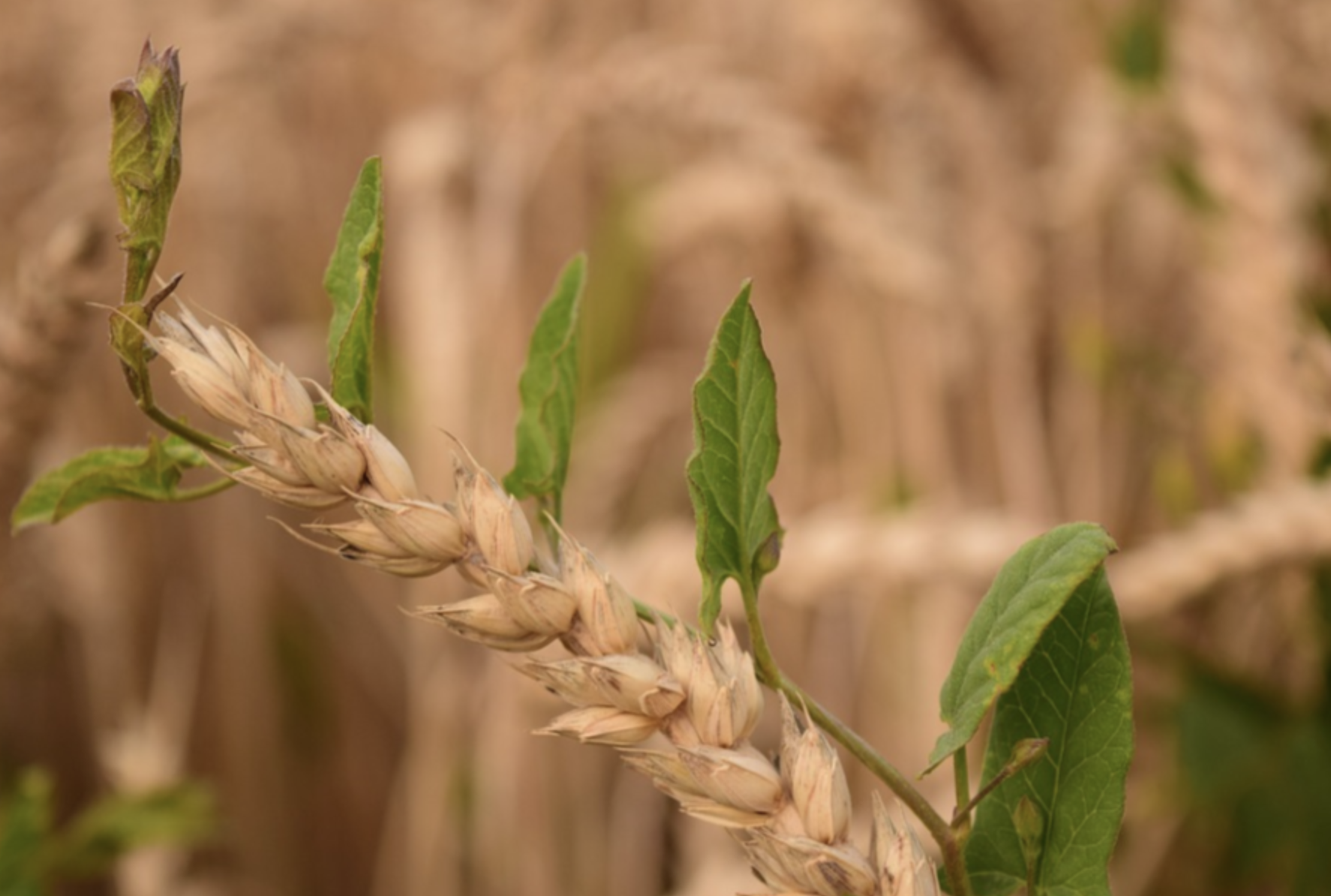
Jesus told them another parable: “The kingdom of heaven is like someone who planted good seed in his field. While people were sleeping, an enemy came and planted weeds among the wheat and went away. When the stalks sprouted and bore grain, then the weeds also appeared.

“The servants of the landowner came and said to him, ‘Master, didn’t you plant good seed in your field? Then how is it that it has weeds?’

“‘An enemy has done this,’ he answered.

“The servants said to him, ‘Do you want us to go and gather them?’

“But the landowner said, ‘No, because if you gather the weeds, you’ll pull up the wheat along with them. Let both grow side by side until the harvest. And at harvesttime I’ll say to the harvesters, “First gather the weeds and tie them together in bundles to be burned. But bring the wheat into my barn.”’”

He told another parable to them: “The kingdom of heaven is like a mustard seed that someone took and planted in his field. It’s the smallest of all seeds. But when it’s grown, it’s the largest of all vegetable plants. It becomes a tree so that the birds in the sky come and nest in its branches.”

He told them another parable: “The kingdom of heaven is like yeast, which a woman took and hid in a bushel of wheat flour until the yeast had worked its way through all the dough.”

Jesus said all these things to the crowds in parables, and he spoke to them only in parables. This was to fulfill what the prophet spoke:

I’ll speak in parables;
        I’ll declare what has been hidden since the beginning of the world.

Jesus left the crowds and went into the house. His disciples came to him and said, “Explain to us the parable of the weeds in the field.”

Jesus replied, “The one who plants the good seed is the Human One. The field is the world. And the good seeds are the followers of the kingdom. But the weeds are the followers of the evil one. The enemy who planted them is the devil. The harvest is the end of the present age. The harvesters are the angels. Just as people gather weeds and burn them in the fire, so it will be at the end of the present age. The Human One will send his angels, and they will gather out of his kingdom all things that cause people to fall away and all people who sin. He will throw them into a burning furnace. People there will be weeping and grinding their teeth. Then the righteous will shine like the sun in their Father’s kingdom. Those who have ears should hear.” --Matthew 13:24-43 (CEB)

I’d like to begin this morning by considering how we hear things. Specifically, depending on who we are or where we are, how we hear things may change. Context. Everything is about context.

Here’s an example. “Throw the book at someone.” Now, if I were a schoolteacher and I heard one of my students say that they were going to throw the book at someone, how might I hear this? How might I respond?

On the other hand, if I were in a courtroom, sitting at a defense table, and I heard the judge talk about throwing the book at someone, how might I hear that? How might I respond?

Today, we have these three parables about the reign of God. The basic meaning of the root of the word, parable, is hidden. Often, the message Jesus is trying to tell is hidden. Mysterious. He even says that in our text when he quotes Isaiah: I speak in parables. I’ll declare what has been hidden since the beginning of the world. Some consider parables to be subversive speech. That Jesus used scenes from everyday life to expose the contradiction between the actual situation of his hearers and the teachings of God’s justice. When I was in Sunday School, I was taught that a parable was an “earthly story with a heavenly meaning.” (Whatever that means!) However you want to consider them, parables are complicated. And, today, we have three of them: the parable of the wheat and the weeds. The parable of the mustard seed. The parable of the yeast. We don’t often hear them read altogether, yet that is exactly how they are placed in this thirteenth chapter of Matthew. One right after the other. Jesus moves from one parable to the next and, immediately, to the third. So, what does this mean? And what is he, through these parables, trying to say?

Again, I would suggest to you that context matters.

For example, if you were one of Jesus’ actual followers, you were likely a member of the bottom tier of society. By Jesus’ day, Israel had become part of the Roman Empire with the top tier of society, the elite of his day - including the ruler, the ruling class, those who did the empire’s bidding, priests, and, perhaps a few merchants - the elite whose primary focus was to maintain the status quo and plunder the wealth of the bottom tier of society, which included the peasants and farmers. So, from the viewpoint of the bottom tier of society, you would immediately get that something wasn’t quite right about these parables. What farmer, after all, would allow the weeds to remain beside the wheat? Or who would even want the mustard seed to grow - because it was considered an invasive plant that could do damage to good crops? Or who would mix yeast into the amount of flour identified in our text - an amount that, once baked into bread, would be the equivalent of 150 loves? Enough to feed an entire village. 

If you were one of Jesus’ listeners, you would begin to understand the upside-down nature of God’s reign. And, then, perhaps you would begin to question the nature of your world. Parables as subversive texts? Perhaps so.

Or consider if you were part of the audience to whom Matthew was writing in this gospel. The first parable might have been understood by your community as the reign of God in the world. That the separation from Israel is now complete and that you are part of the church beginning the Gentile mission. The world is now your field of endeavor, an opportunity for you, as part of Matthew’s community, to begin to bear fruit. 

Or consider if you were a follower of Origen, a third century early church father, who wrote that the parable of the wheat and the weeds was really about what was inside us. Or, to put it in a Lutheran framework - the wheat being the saint in us and that weeds being the sinner in us. 

Context matters. Where you are and who you are as you are reading these parables change their meaning. Which may be a little unsettling. Perhaps so.

But there are a few key understandings that, no matter who you are, where you are, or what time frame in which you are reading these parables, there are a few things we can notice universally about them. 

First. Notice in the parable of the wheat and the weeds who sows the seeds and who controls the reaping process. It’s neither you nor I.  But God.

Second. Notice in the parable of the mustard seed, the subversive nature of God’s reign. Notice, again, who plants the seed so small that it’s almost invisible, but that, through nurturing and care, grows into something large and beautiful that serves others, whether it's the birds of the air or the least among us. It all begins, once, again with God. 

Third. Notice that the parable of the yeast is really not about the yeast at all. It’s about the amount of flour that, along with such a small cake of yeast, can make so. Much. Bread. Such abundance that it can only be shared. An abundance that comes from God. And God alone.

This is what the reign of God looks like. Planted by God and leading to such great abundance, yet with a reminder that it is, once again, God and God alone who will create and grow and, ultimately, be the final arbiter of God’s justice. It is a reign initiated by Jesus, who affirms that it is both a present reality and a future hope. A now, but not yet. A reign that, like pregnancy, is mysterious, miraculous, comes with pain and urgency, and gives new life. A reign that pervades and transforms everything it encounters. A reign that, though we cannot see it fully now, has as its hallmarks, hospitality, generosity, and abundance.

So, whether you are part of Grace & Glory considering what the future may bring. Or whether you are a member of Third on the cusp of something bread new, may we all remember and hold fast to the truth that the reign of God is one of power and possibilities. And that we are called to come alongside and share. 

May we have ears to hear. Amen.

Preached Sunday, February 12, 2023, at Grace & Glory Lutheran, Prospect, with Third Lutheran, Louisville.
Sixth Sunday after Epiphany
Readings: Matthew 13:24-43; Psalm 84:1-7


Sunday, September 4, 2022

Unraveled: Unraveling Fear

They came to the other side of the sea, to the region of the Gerasenes. And when he had stepped out of the boat, immediately a man from the tombs with an unclean spirit met him. He lived among the tombs, and no one could restrain him any more, even with a chain, for he had often been restrained with shackles and chains, but the chains he wrenched apart, and the shackles he broke in pieces, and no one had the strength to subdue him. Night and day among the tombs and on the mountains he was always howling and bruising himself with stones. When he saw Jesus from a distance, he ran and bowed down before him, and he shouted at the top of his voice, “What have you to do with me, Jesus, Son of the Most High God? I adjure you by God, do not torment me.” For he had said to him, “Come out of the man, you unclean spirit!” Then Jesus asked him, “What is your name?” He replied, “My name is Legion, for we are many.” He begged him earnestly not to send them out of the region. Now there on the hillside a great herd of swine was feeding, and the unclean spirits begged him, “Send us into the swine; let us enter them.” So he gave them permission. And the unclean spirits came out and entered the swine, and the herd, numbering about two thousand, stampeded down the steep bank into the sea and were drowned in the sea.

The swineherds ran off and told it in the city and in the country. Then people came to see what it was that had happened. They came to Jesus and saw the man possessed by demons sitting there, clothed and in his right mind, the very man who had had the legion, and they became frightened. Those who had seen what had happened to the man possessed by demons and to the swine reported it. Then they began to beg Jesus to leave their neighborhood. As he was getting into the boat, the man who had been possessed by demons begged him that he might be with him. But Jesus refused and said to him, “Go home to your own people, and tell them how much the Lord has done for you and what mercy he has shown you.” And he went away and began to proclaim in the Decapolis how much Jesus had done for him, and everyone was amazed. --Mark 5:1-20 (NRSV)

Grace, mercy and peace to you from God our Creator, Jesus Christ, our Redeemer, and the Holy Spirit, our Advocate and Sustainer. Amen.

Fear. It’s the topic of our text today - a story that is preceded by the story of Jesus and his disciples crossing the Sea of Galilee. It’s that story of a storm that comes up while they are in the middle of the Sea of Galilee - a big lake really. And of Jesus calming the waters. Yet, it's interesting to me that the very last thing Jesus says before they reach the eastern shore and step into today’s story - the last thing Jesus says to the disciples is “Why are you afraid? Have you no faith?”

Fear. Why are you afraid? What are you afraid of? Now, I know our very American culture demands that we respond to that question with “Nothing. I’m afraid of nothing.” Yet, I wonder. I wonder if we move beyond that claim and think about those times, perhaps. Or those people, perhaps. Or those places, perhaps. That, if we are paying attention to our body and the reaction of our body to those particular times, people or places, we have to admit our fear.

On my vacation last week I had an opportunity to have a long conversation with an old friend who has lived in Los Angeles since he moved there from southern Indiana right after college. Like so many of us when we’re first starting out, he lived in what could be called “not the best part of town.” Maybe you’ve had a similar experience, where with limited income you had to find a place you could afford. A place that didn’t always feel safe. Even if you haven’t had that experience, think about what it feels like to walk at night from a restaurant or a bar or some other place in a “not so good” location. Those little twinges you feel as you hold your keys in your hand ready to open your car door. Or to protect yourself. Or as you pull your purse or your loved one closer to you. Just a little fearful of something or someone that might step out of the dark and turn your life upside down.

So, this friend, as he moved up and made more money, then, as he got married to a woman who was also successful, he began to move closer and closer to the westside of Los Angeles. The side where those with money live. And as he made that move, his attitudes began to change. Especially his attitude around the homeless.

Homelessness is a huge problem in Los Angeles as it is in many cities, including here in Louisville. There, especially, it’s a combination of the climate, housing costs that have spiraled out of control and out of reach for so many, plus drug addiction and a lack of mental health resources. All of this together has created a huge homeless population in L.A. - a population that, especially over the last ten years, has moved throughout the city, including into the west side. Into his neighborhood. 

There’s been a lot of public discussion there over how to deal with this issue, especially around how to deal with the homeless who suffer from mental illness. My friend has a good heart, but he, like many, has come to the position that the laws should be changed to allow those with mental health issues, especially those who seem out of control, to be forcibly removed from the streets and institutionalized. 

Out of sight, out of mind.

Just like the man in today’s story. This man named Legion is demon-possessed. Not just by one demon, but by many. He is uncontrollable. And, according to our text, not violent toward the people in the nearby village, but hurtful to himself. And as much as the villagers have tried to control him, placing him in chains and leg irons, their attempts have been futile. So, he has been banished apparently. Wandering in the tombs and hills nearby.

Out of sight, out of mind.

It’s a story that would make any Jew uncomfortable. Located in the land of the Gerasenes, it’s a Gentile area, so to begin with it’s unclean and out of bounds. There's a herd of swine there, too, which suggests impurity. Plus there’s that cemetery nearby, which for a Jew would be off limits. The man who comes to Jesus has an unclean spirit. This whole place, this man, this whole situation would be taboo for any Jew. But, as we have seen so often before, this is exactly the forbidden territory into which Jesus ventures.

He sends the man’s demons packing. Specifically, at their request, into a herd of swine nearby. Who, then, unexpectedly run off a cliff into the sea, drowning the unclean spirits. The word gets around and the villagers come out to see this man, previously possessed, now clothed and in his right mind. One might think that they would rejoice with him, celebrate over a life restored. But, instead, when they see him sitting there, they are afraid. 

Jesus’ healing action has upset their status quo. They find Jesus threatening. Their world, as they have created, it is tolerable. Even demons can be endured as long as the possessed are relegated to a place outside civilized territory - among the tombs on the outskirts of town. But, when they see the transformation of this man, they are fearful. 

What’s so frightening about Jesus and this action? Because, unlike them - and unlike us, Jesus refuses to leave the world as it is. Jesus transgresses those boundaries and rescues those who are “beyond help.” Such a person - like Jesus - can’t be controlled. Such a person - like Jesus - can only be followed. And they are unwilling. So, they ask him to leave. Because the cure of this demon-possessed man is too expensive. Not just in terms of pigs, but in terms of social stability. Jesus upsets the status quo. The Kingdom of God upsets the status quo. And, as we see in this story and in many of the stories of these past 13 weeks, humanity, its society and its institutions - we - often impede the in-breaking of God’s kingdom more than we expedite it. 

But God’s reign breaks into the world. Not so much through flawed institutions and individuals, but in spite of them. God’s reign comes with power - power to do things neither you nor I, nor any other human being, can do on our own. God’s reign forces us to perceive the truth that we are not in control. As we seek to control our lives and our world, we hold onto what we perceive as safe. As we push down our fear with the claim that nothing frightens us. As our world unravels around us and we lose complete control. Or we lose the control we thought we had. It is then, and only then, when we are vulnerable enough to see that only God is in control. That only God is at work in our midst. Turning things around. Skewing the world toward justice. Bringing resurrection out of death. For us. So that we might be free.

And so that our fear might be out of sight, out of mind.

May God grant it. Amen.

Preached September 4, 2022, at Grace & Glory Lutheran, Prospect, KY, with Third Lutheran, Louisville, KY.
13th Sunday after Pentecost
Readings: Mark 5:1-20, Psalm 65

Sunday, January 26, 2020

God's Kingdom Announced: The Hiddenness of God

Again [Jesus] began to teach beside the sea. Such a very large crowd gathered around him that he got into a boat on the sea and sat there, while the whole crowd was beside the sea on the land. He began to teach them many things in parables, and in his teaching he said to them: “Listen! A sower went out to sow. And as he sowed, some seed fell on the path, and the birds came and ate it up. Other seed fell on rocky ground, where it did not have much soil, and it sprang up quickly, since it had no depth of soil. And when the sun rose, it was scorched; and since it had no root, it withered away. Other seed fell among thorns, and the thorns grew up and choked it, and it yielded no grain. Other seed fell into good soil and brought forth grain, growing up and increasing and yielding thirty and sixty and a hundredfold.” And he said, “Let anyone with ears to hear listen!”

When he was alone, those who were around him along with the twelve asked him about the parables. And he said to them, “To you has been given the secret of the kingdom of God, but for those outside, everything comes in parables; in order that


‘they may indeed look, but not perceive,
    and may indeed listen, but not understand;
so that they may not turn again and be forgiven.’”

And he said to them, “Do you not understand this parable? Then how will you understand all the parables? The sower sows the word. These are the ones on the path where the word is sown: when they hear, Satan immediately comes and takes away the word that is sown in them. And these are the ones sown on rocky ground: when they hear the word, they immediately receive it with joy. But they have no root, and endure only for a while; then, when trouble or persecution arises on account of the word, immediately they fall away. And others are those sown among the thorns: these are the ones who hear the word, but the cares of the world, and the lure of wealth, and the desire for other things come in and choke the word, and it yields nothing. And these are the ones sown on the good soil: they hear the word and accept it and bear fruit, thirty and sixty and a hundredfold.”

He said to them, “Is a lamp brought in to be put under the bushel basket, or under the bed, and not on the lampstand? For there is nothing hidden, except to be disclosed; nor is anything secret, except to come to light. Let anyone with ears to hear listen!” And he said to them, “Pay attention to what you hear; the measure you give will be the measure you get, and still more will be given you. For to those who have, more will be given; and from those who have nothing, even what they have will be taken away.”

He also said, “The kingdom of God is as if someone would scatter seed on the ground, and would sleep and rise night and day, and the seed would sprout and grow, he does not know how. The earth produces of itself, first the stalk, then the head, then the full grain in the head. But when the grain is ripe, at once he goes in with his sickle, because the harvest has come.”

He also said, “With what can we compare the kingdom of God, or what parable will we use for it? It is like a mustard seed, which, when sown upon the ground, is the smallest of all the seeds on earth; yet when it is sown it grows up and becomes the greatest of all shrubs, and puts forth large branches, so that the birds of the air can make nests in its shade.”

With many such parables he spoke the word to them, as they were able to hear it; he did not speak to them except in parables, but he explained everything in private to his disciples.
--Mark 4:1-34 (NRSV)

Grace, mercy, and peace to you from God, our Father, and from our Lord and Savior, Jesus Christ. Amen.

I have a friend who farms with his brother and two adult sons in eastern South Dakota. I may have mentioned them before. It’s a family operation. They farm over 10,000 acres a year, predominantly wheat and soybeans, plus alfalfa as feed crop for the cattle they also raise. The first time I saw them in full operation was about 10 years ago. 

Farming has changed dramatically from the days that my dad farmed. Then, it involved driving a relatively basic tractor, planting seed, praying for rain and for sun at the right times. And, then, harvesting. There was a near complete reliance upon nature. There was really very little that my dad could do to ensure a good crop. Today, farming is truly a science. It has become so technologically advanced that farmers can now view and study their fields through satellite images. They can see where they need to re-seed. Or to add more fertilizer. Equipment is massive and computer-operated. And, although the hours are still as long and the pressure to plant and harvest at the right times remains, a farmer can sit in the air-conditioned cab of his or her massive tractor, turn on the GPS and let the vehicle literally drive itself around the field.

But, there is one thing that a farmer cannot do. He or she can know exactly when the right time is to plant the seed. They can fertilize it perfectly. They can irrigate it and provide exactly the right amount of water. And, although, they can’t always control the sun or the rain or the hailstorms that might come through, the efficiency of farming today far outpaces that of years ago. But there is one thing that a farmer simply cannot do. They cannot pull the sprout out of the seed. 

Today, we have three parables about seeds and farming. In his day, Jesus’ method of teaching through parable was not uncommon. It was a way to use something that was common and familiar to teach a deeper meaning. In the parables today, Jesus touches on farming, something that would have been very familiar to his listeners. But the deeper teaching, for those who were able to hear and understand it, was about the kingdom of God.

This is the point in the section that begins with verse 10. On first hearing, it may be difficult. A little unsettling even. Surely, Jesus wants everyone to understand what he is trying to teach, right? But, that’s not what these verses say. It’s like it’s a secret club, a closed society. Where the insiders get the “truth” and those who don’t remain outside. Yet, as things will unfold in the gospel of Mark, we will begin to see the lines between these groups become blurred. At one point or another, everyone is confused by Jesus. And sometimes even, those on the “outside” seem to understand Jesus more than those on the “inside.”

I want you to think back to the fall. To the beginning of the Hebrew scripture in Genesis, where we first meet a God who creates, who loves, and then seems to become grief-stricken and angry after this humanity that God has created with freewill, rebels. God devises another plan, choosing a people to lead and to teach so that they might begin to reveal to the world the loving and life-giving nature of God. And, they, too, rebel. Over and over God meets Israel where they are, attempting to reach them, to reveal to them God’s true nature that which we first glimpsed at the beginning of creation. Yet, they continued to rebel. God attempts to bring them back into the boundaries established by God, boundaries designed to bring life instead of destroying it. Finally, when this fails, God determines an ultimate plan to bring life to all humanity and to all creation through God’s very own Son. It is in him where the true nature of God is revealed. A nature of love and sacrifice. A nature of forgiveness and grace. 

But, God is not finished. This is the message of, first, John the Baptist and, then, Jesus, through whom the kingdom of God has come near. It’s actually just the beginning. The beginning of a new way of being. A new way of living. A new reign. A reign of peace and justice. And a reign of the continuing revelation of God.

Because God’s work on earth did not end with Jesus. It began with Jesus, through whom this true nature of God was revealed and the hidden nature - the mysterious nature - of God’s reign began. It continues to be unveiled. God continues to reveal godself to us. A few years ago, the United Church of Christ began a campaign where they put up billboards around the country and placed ads on television using the phrase, “God is still speaking.” That's the point here. We are still learning about God and God’s kingdom. The mysteries of God and God’s kingdom continue to be revealed. Much of this still remains hidden and veiled from our eyes, even from those who are the most learned about the things of God.  

So, what are we to do? How are we to begin to understand? Jesus tells us as he tells the disciples: Listen. Look. Pay attention.

In my seminary class on the Lutheran Confessions, one day my professor, who is a noted Lutheran scholar, confessed to us a huge mistake he had made. In the early years of the debate in our church - the very same debate that our Methodist sisters and brothers are going through right now - over the issue of homosexuality, and gay marriage, and, particularly, the ordination of gay pastors, he had come out very publicly in opposition to everything around this issue. Claiming as the church had done for so long, that homosexuality was an abomination and that it was contrary to the will of God.

And then, he had a friend come out after years of hiding his homosexuality. As my professor supported his friend and walked alongside him, he was witness to the transformation in his friend. From darkness to light. From deep despair to peace and wholeness. To joy and happiness. And my professor began to wonder just what new thing God might be doing here. What new place God might be moving the church to. What new aspect of God and God’s reign was being revealed.

If we, like my professor, listen. If we look and we pay attention, we, too, can begin to see the unfolding of the good news of God’s kingdom. It manifests itself in light and love. In joy and happiness. In forgiveness and acceptance. These are the hallmarks of God’s kingdom - the signs for us that God’s kingdom is coming near and is being further revealed. Signs of goodness, rather than evil. Peace, rather than violence, Wholeness, rather than despair and destruction. Life, rather than death. 

And so we continue to throw out the seeds of the good news in what we say and what we do. There will be some seeds that we may not, in our time, see sprout.  This is perhaps one of the hardest parts of our faith. Over the past couple of months, I have been working with a family to try to keep them together and to keep them from being evicted. There have been signs of the seeds of love and support and grace and forgiveness sprouting at times. And, yet, this past week, everything seems to have completely fallen apart. 

It is easy to fall into despair and a sense of hopelessness. Yet, we do not know when the seeds we have planted will sprout. We may never see that happen. But, we trust that God - in God’s time - will grow God’s kingdom. And we continue to listen, to look and to pay attention. Because often there are other seeds that sprout when we least expect them, in people and places we never anticipated. This is the paradox of the reign of God - that it is revealed precisely where it often seems to be most hidden.

Just like the farmer, we can never know when God will bring the seeds that have been planted to sprout. And to take root. All we can continue to do is to plant them. With love. And with grace. And with the trust in God’s promise that the seeds that have been planted will grow in God's time into an abundant harvest that will be gathered at the fullness of the reign of God. When the full nature of God and of God’s kingdom will be revealed and no longer hidden. 

"For now we see in the mirror dimly. But, then, we shall see face to face." (1 Cor. 13:12)  Amen.

Preached January 26, 2020, at Grace & Glory Lutheran Church, Goshen, KY.
3rd Sunday after Epiphany
Readings: Mark 4:1-34, Hosea 10:12, Psalm 126

Sunday, May 5, 2019

The Ways of the Kingdom: Service

“When the Son of Man comes in his glory, and all the angels with him, then he will sit on the throne of his glory. All the nations will be gathered before him, and he will separate people one from another as a shepherd separates the sheep from the goats, and he will put the sheep at his right hand and the goats at the left. Then the king will say to those at his right hand, ‘Come, you that are blessed by my Father, inherit the kingdom prepared for you from the foundation of the world; for I was hungry and you gave me food, I was thirsty and you gave me something to drink, I was a stranger and you welcomed me, I was naked and you gave me clothing, I was sick and you took care of me, I was in prison and you visited me.’ Then the righteous will answer him, ‘Lord, when was it that we saw you hungry and gave you food, or thirsty and gave you something to drink? And when was it that we saw you a stranger and welcomed you, or naked and gave you clothing? And when was it that we saw you sick or in prison and visited you?’ And the king will answer them, ‘Truly I tell you, just as you did it to one of the least of these who are members of my family, you did it to me.’ Then he will say to those at his left hand, ‘You that are accursed, depart from me into the eternal fire prepared for the devil and his angels; for I was hungry and you gave me no food, I was thirsty and you gave me nothing to drink, I was a stranger and you did not welcome me, naked and you did not give me clothing, sick and in prison and you did not visit me.’ Then they also will answer, ‘Lord, when was it that we saw you hungry or thirsty or a stranger or naked or sick or in prison, and did not take care of you?’ Then he will answer them, ‘Truly I tell you, just as you did not do it to one of the least of these, you did not do it to me.’ And these will go away into eternal punishment, but the righteous into eternal life.” Matthew 25:31-46 (NRSV)

Grace and peace to you from God, our Father, and from our Lord and Savior, Jesus Christ. Amen.


If you are a native Kentuckian, you may recognize this song. Maybe even if you aren’t a native Kentuckian. It was written on night in 1931 in Harlan County, KY. In 1931, the mine workers and the mine owners in this southeastern county in Kentucky were locked in a bitter and violent struggle called the Harlan County War. In an attempt to intimidate the family of Sam Reece, who was a union organizer for the mine workers’ union, the sheriff of the county and his men, who were hired by the mining company, entered their home in search of him. Now Mr. Reece had been warned ahead of time and had escaped, but his wife, Florence, and their children had remained. They were terrorized in their own home. That night, after the sheriff and his men left, Mrs. Reece tore a page off a calendar that hung in their kitchen and she wrote the lyrics for the song. Tradition has it that the tune is from an old Baptist hymn.

This song would go on to be used in nearly every major protest movement in our country. In the fight for workers’ rights. In the civil rights movement. In the women’s movement. In the fight for gay and lesbian rights. In the anti-war protests of Vietnam, Iraq and Afghanistan. Even in today’s Poor People’s Campaign, a campaign that seeks to renew the original campaign started by Martin Luther King, Jr.. 

This song is a song that challenges us. To make a decision about which side we will choose. Whether we will stand on the side of those with power. Or on the side of those with no power. 

In the same way, our text today is a story of sides. And of choices. We are in the portion of Matthew that is called the Eschatological Discourse - a discussion about the end times. About Jesus’ second coming. In Matthew, this discourse between Jesus and disciples begins with one question asked by the disciples at the beginning of chapter 24. It is asked by them in response to a comment made by Jesus in the temple - that no stone in the temple would remain. That everything will be demolished. This makes the disciples wonder. So, later, they come to Jesus privately and ask the question: “Tell us, when will these things happen? What will be the sign of your coming and the end of the age?”

In response to this question, Jesus describes the signs in heaven and on earth that will precede the end. Then, Jesus goes on to stress that no one knows the day or the hour, not even him. And that, while the disciples wait, they should remain vigilant, ready for Christ’s return. 

Jesus goes on, then, as he often does in Matthew, to illustrate his point through the use of parables. Four parables. Last week, we heard one of the four. The Parable of the Talents (The Parable of the Ten Bridesmaids). Today, we hear the last of the four. The Parable of the Sheep and the Goats.

The main character in our parable is that of a king. A monarch. One who will sit on his throne before all of the nations with all people gathered in front of him. And, then, just like a shepherd in ancient days, the king will separate the people. Setting them apart in two groups. The sheep on one side. And the goats on the other.  

Notice that, in this parable, Jesus, as he often does, makes use of everyday things. In today’s lesson, it’s about shepherding practices. It would have been common knowledge in ancient times that a shepherd tending a herd of goats and sheep would separate the two at night. During the day, they would graze together. But, at night, they would be separated because sheep prefer to spend the night in the open air. And goats, well, they like the warmth of a shelter. Plus, goats could be trouble-makers at times. So, at night, the shepherd would separate them. 

It would also be a common understanding that sheep were more valuable than goats. Not only did they provide food, they also provided wool, milk for cheese, and other products. They were also used more than any other animal for sacrifice in the temple.

So the king separates the nations like sheep and goat. The sheep to the right. The goats to the left. The King will turn to those on his right. (In ancient days, to be placed at the right hand of a king meant that you were in the king’s favor. One of the chosen ones. Set apart.) So, the king will turn and say to those on his right, “Come and receive the blessings you have inherited from my Father.” They have not been placed there because of their superior knowledge of scripture. Or their exceptional spiritual gifts. But, because they have shown mercy and compassion to the hungry. To the thirsty. To the stranger. The naked. The sick. The imprisoned. That in serving those on the edges of society - the marginalized - they have been unknowingly serving the king.

Those on the right. The righteous. Do you notice that they are completely unaware of what they have done? They have not been acting in a calculated way to earn the king’s favor. But, they have simply been doing what is natural for them. They have responded to God’s gift of grace by serving those in need. They will be gathered with the king and be given unending life.

And, then, there are those on the left. Those who are not in the king’s favor. Those with whom the king is displeased. Like those on the right, they, too, have been doing what is natural for them. They have been looking out for their own interests. They have not been bothered by the needs of others. They, too, like those on the right, are also surprised to learn that they have encountered the king. In the marginalized and the powerless. And, in their encounter with them - with the “least of these,” they have shown which side they are on. They are cast away from the king. Into the darkness. Into unending fire. Into eternal punishment. Just as the unfaithful servant, the foolish bridesmaids, and the unfaithful servant. 

Sisters and brothers, this can be a difficult parable for us. This discourse on end times. On Jesus’ second coming. On the judgment of the world. It is not something we like to think about. Yet, this parable is a fitting conclusion for our learning about the ways of God’s kingdom. Because, if there is no final judgment in God’s kingdom, that means that God does not care about the injustice and the suffering in our world.

But, God does care. God cares about it so much that, beginning in the very next chapter, we will see how Jesus bore this injustice and brokenness and suffering in his own body. To triumph over it. To defeat evil and death. As a ransom for all nations. As a ransom for us. For me. And for you.

Yet, even as Christ is now raised from the dead, highly exalted, and seated far above rule and authority, Jesus is not apart from us. Jesus is not distant and aloof. Jesus meets us here. In the bread and the wine, in his body and blood. Jesus meets us here in our brokenness. And continues to transform us. So that we might go out into the world and meet Jesus in the faces of the broken and powerless. In the needs of our suffering world.

Today we are commemorating the 25th anniversary of the Rwandan genocide. It was a time when those in power in that country murdered over 10% of their population, simply because they were of a different ethnic group. 

So, which side are you on? Are you on the side of the powerful? Or the powerless? Are you on the side of the transformed, those who seek to live lives of service to those who have no power in response to God’s radical gift of grace? Or on the side of those who aren’t, who live in the selfish ways of the world, in the ways of their own interest instead of the ways of God’s kingdom? 

May God work in us to choose the side of the weak and the powerless. To live in the ways of God’s kingdom. Ways of forgiveness, generosity, and hospitality. Ways of vigilance and trustworthiness. And, particularly in the way of service. In God’s way of service. A  way that is so desperately needed by our broken world. May God grant it.  Amen. 

Preached April 7, 2019, at Grace & Glory Lutheran Church, Goshen, KY.
Fifth Sunday in Lent
Readings: Matthew 25:31-46, Psalm 98:7-9

The Ways of the Kingdom: Hospitality

Once more Jesus spoke to them in parables, saying: “The kingdom of heaven may be compared to a king who gave a wedding banquet for his son. He sent his slaves to call those who had been invited to the wedding banquet, but they would not come. Again he sent other slaves, saying, ‘Tell those who have been invited: Look, I have prepared my dinner, my oxen and my fat calves have been slaughtered, and everything is ready; come to the wedding banquet.’ But they made light of it and went away, one to his farm, another to his business, while the rest seized his slaves, mistreated them, and killed them. The king was enraged. He sent his troops, destroyed those murderers, and burned their city. Then he said to his slaves, ‘The wedding is ready, but those invited were not worthy. Go therefore into the main streets, and invite everyone you find to the wedding banquet.’ Those slaves went out into the streets and gathered all whom they found, both good and bad; so the wedding hall was filled with guests.

“But when the king came in to see the guests, he noticed a man there who was not wearing a wedding robe, and he said to him, ‘Friend, how did you get in here without a wedding robe?’ And he was speechless. Then the king said to the attendants, ‘Bind him hand and foot, and throw him into the outer darkness, where there will be weeping and gnashing of teeth.’ For many are called, but few are chosen.” Matthew 22:1-14 (NRSV)

Grace and peace to you from God, our Father, from our Lord and Savior, Jesus Christ, and from the Holy Spirit, our Advocate and Comforter. Amen.

Have you ever thrown a party and no one showed up?

That happened to my roommates and I when I was in my 20’s. We’d been rooming together for a couple of years and had developed quite a reputation for throwing parties. I was pretty fortunate to live with my two roommates. One of them was a former bartender, so he was always creating new drinks and, each time we had a party, he would make a new cocktail specific to whatever theme we were using for our party. My other roommate liked to cook, which was awesome. So, he was always in charge of the food and would create these abundant feasts, again, specific to the theme of our particular party. Me? Well, I was good at cleaning. So, since neither one of my roommates were very good at it, this was my job. To clean our house and make it ready for the party. 

One year we decided to throw a party on New Year’s Eve, our first ever! To make it easy for people to come, so that they wouldn’t have to worry about driving home, we invited them to bring their pajamas along. And to join us in one big slumber party and, then, to get up the next morning and prepare a big brunch. It was an awesome plan!

The only problem, though, was that we made this decision just a couple of days before New Year’s Eve. So, by the time we let everyone know, they had already made other plans. We had a few RSVPs from people who said they’d come to our brunch. But, no one confirmed for the party. We were still hopeful though, so we went about getting everything ready.

Then New Year’s Eve came. The house was decorated with streamers and special lights. We had noisemakers and confetti ready for midnight. The food was awesome and abundant. And a special cocktail had been created just for this party. So, we waited. And we waited. And waited. And waited. Until it became very clear that no one was going to show up to our party.

As we sat there, drinking our special cocktail, nursing our pride, we decided that, if no one was going to come, then we were going to, at a minimum, make it look like it had been a ridiculously, crazy fun blowout part so that those coming the next morning for brunch would see the mess and regret not coming the night before. 

So, we broke open bags of confetti and tossed it around the entire house. (I continued to vacuum up confetti for the next several years!) We took all the noisemakers and placed them throughout the house. Then, we created half-eaten plates of food that we left everywhere, along with half-drunk cocktail and champagne glasses, with even a couple of them turned over on their sides. It looked like it had been an amazing party!

When our guests arrived the next morning for brunch, we invited them in. As they walked in and saw the party mess, we mentioned - very casually - what an awesome party it had been and how much fun they'd missed!  When the following New Year’s Eve came around, the word had spread among our friends and acquaintances. We had a packed house! 

This story is a little bit like our story today - where invitations are issued and no one comes. The parable of the great wedding feast.

The king’s son is getting married. So, the king prepares the great wedding feast. In ancient times, it was customary to invite guests to a banquet in two phases. The banquet host first sends messengers to the guests, several days in advance (Unlike us!), to invite them and to tell them to be ready at an appropriate time. 

The second invitation is sent when the feast is prepared; the guests are now to come. In our story, it appears that the first invitation had already been sent. The invitation in today’s parable is the second invitation. It’s the invitation that says the time is now, come and feast!

However, to the king’s dismay (and ours), the first set of guests violates ancient hospitality rules by refusing to come. A refusal of an invitation - of a king’s invitation - is tantamount to a rebellion. So, a third invitation is issued. This invitation is much more descriptive. It’s intended to engage our senses. We can almost smell and taste the food. The beef that has been perfectly roasted. The wide variety of side dishes prepared. The breads. And the desserts. Oh, the desserts! And, don’t forget the drinks. Who could refuse such an invitation?

Yet, they do. Some of them go back to their fields. Others to their businesses. Yet, others seize the king’s servants, attack them brutally, and kill them.

The king is now furious. And he reacts with force. Destroying those who have refused his invitation. Burning their towns.

The wedding banquet, though, is still ready and waiting for guests. So the monarch sends servants into the streets to invite anyone and everyone they can find. Even those whom the monarch doesn’t know. Those who live out in the countryside. Those living on the margins. 

They come. The wedding hall is packed with people, good and bad. The monarch enters the hall and the feast is about ready to begin. But, just then, the monarch spots someone who is not wearing the proper clothing. We wonder, given the last minute invitation, how he could have been expected to have the right garments to wear to the feast. Yet, this is the expectation of the monarch. And, when he sees the guest, improperly clothed, he throws him out. Into the darkness.

My friends, this is Israel’s story. This is the church’s story. This is our story. It is a hard and difficult story. Over and over God sends God’s servants out. First to Israel. Then, to the rest of the world. Over and over. To come. To join in the wedding banquet. To receive God’s abundant forgiveness. To receive God’s extravagant grace.  And to be rejected. To continue to invite. And to be rejected. Again and again and again. Is it any wonder that God shouldn’t be as outraged as the king in our story. Outraged at the rejection of God’s lavish grace? At the rejection of God’s hospitality? At the rejection of God’s abundant love feast? 

But, God doesn’t give up. God continues to invite. And, the banquet hall will become full. Yet, in the midst is someone who, although answering the invitation, is not properly dressed. One who hasn’t put on the clothing of righteousness. One who has been chosen, but who has failed to live this new way of life, this life of discipleship. As Colossians 3:12 puts it, “As God’s chosen ones, holy and beloved, clothe yourselves with compassion, kindness, humility, meekness, and patience. To bear each other in forgiveness and to be clothed in love." God invites us into a life transformed through the body and blood of our Savior, Jesus Christ. 

So, who are you in this story? Where are you in God’s kingdom? In this reign of hospitality of forgiveness? Of grace and love? Have you answered the invitation? If so, are you clothing yourself in righteousness? Are you living into God’s hospitality, receiving God’s forgiveness in the sacraments? Living out God’s grace in a transformed life that others might see you and seek to receive the same hospitality and grace from God?

I pray that you are. I pray that God is transforming your heart to more fully join and experience the party. To drink and to eat deeply of God’s hospitality. To feast at God’s abundant table. To be transformed. Then, to share this gift with those who have yet to be invited. Amen.

Preached March 24, 2019, at Grace & Glory Lutheran Church, Goshen, KY.
Third Sunday in Lent
Readings: Matthew 22:1-14, Psalm 45:6-7

Friday, June 29, 2018

Letting the Farmer Go Free (English)

He also said, “The kingdom of God is as if someone would scatter seed on the ground, and would sleep and rise night and day, and the seed would sprout and grow, he does not know how. The earth produces of itself, first the stalk, then the head, then the full grain in the head. But when the grain is ripe, at once he goes in with his sickle, because the harvest has come.”

He also said, “With what can we compare the kingdom of God, or what parable will we use for it? It is like a mustard seed, which, when sown upon the ground, is the smallest of all the seeds on earth; yet when it is sown it grows up and becomes the greatest of all shrubs, and puts forth large branches, so that the birds of the air can make nests in its shade.”

With many such parables he spoke the word to them, as they were able to hear it; he did not speak to them except in parables, but he explained everything in private to his disciples. Mark 4:26-34 (NRSV)

Grace and peace to you from God, our Creator, and our Savior, Jesus Christ. Amen.

On behalf of my congregation in Kentucky--Grace & Glory--I bring you warmest greetings. As we’ve begun to know each other over these past few days and have learned of the different places we’ve come from to be here, I’m particularly grateful for all of you and to know that many of our congregations in this church are exploring the possibilities of new ministries in our changing (or changed) contexts. And even that some of you are in or nearing first call.

I’ve been now in my first call in Kentucky for about a year-and-a-half. In some ways, living there has been this interesting mix between the urban life I’ve lived as an adult and also of the rural life that I lived until the age of 19.

My father was a rancher in north central South Dakota, an area that at that time was known for a fairly arid climate, but with a geography that was well suited to growing sheep and cattle. In addition to ranching, he also grew feed crops--crops that would be harvested at the end of each summer and put up to ensure that there would be enough to feed our animals over rather brutal winters.

So, it seems no coincidence that our lessons today should be two parables about farmers and farming and seeds. The Gospel of Mark contains few parables, but there are an entire string of them that begin in the third chapter and conclude with these two. When one looks at all of them together we can see that they create a context for understanding the ministry of Jesus as the inaugural ministry of the coming, yet somewhat elusive, reign of God. A reign that feels as though it will never come because of some blunder by a disciple or two. Or that will remain hidden because of a command by Jesus to, simply, keep it a secret.

One aspect of Jesus’ parables suggested by Matt Skinner at Luther is that they have a way of reordering our conventional assumptions and values. They don’t explain how we can necessarily recognize the reign of God. But, they do make it clear that we will need to adopt new ways of perceiving God’s kingdom.

The first parable is about a farmer. Something with which I can definitely relate. There’s nothing earth-shattering about the chain of events in this parable. The farmer plants the seeds. And then the farmer waits. And waits. And waits. And waits.

As one who has lived with a farmer, I can attest to the waiting. And waiting. Sometimes a little worrying. Then more waiting. And as one waits, without really doing anything other than the initial planting, things begin to happen. The seeds, buried in the ground, begin to sprout. And then to break through. And then to grow. And grow. And grow. Until finally it is time for the harvest. There is really little that the farmer must do except to plant the seed and then to trust that nature will take its course, as it inevitably always does.

The second parable, then, is that of the mustard seed. It’s a parable that we have likely heard many times over the course of our lives. Of a seed that isn’t like any ordinary seed, but that begins as something very small and seemingly insignificant, but that turns into something very visible and great. A tiny seed that grows and morphs into the greatest of all shrubs. A shrub that is more than just beautiful, but a shrub whose branches offer shelter and security. 

I am here this week because the congregation I serve is at very start of a new ministry to our Latino neighbors. Many of you are here, too, because you are either exploring something similar or already moving forward. We’ve listened to the statistics that relate to the growth of the Latino population in our country. We’ve also heard the statistics about the decline of congregations in the ELCA. In the midst of these statistics and in the midst of these two parables, there are a couple of lessons for us.

One of the first, and perhaps most important things for us to remember is that, just as the farmer in the first parable has little to do with the growth of the seeds, so, too, we have little to do with the growth of God’s kingdom. Just as nature eventually ensures the sprouting and growth of the seeds, so, too, the nature of God’s kingdom is to grow and to be seen and witnessed. We are like the farmer, waiting for the seeds of God’s kingdom to grow and take root, yet knowing though that it will happen. Because this is what God’s kingdom does. It happens.

Then, the second lesson is that God’s kingdom cannot be likened to amazing trees, such as the cedars of Lebanon. Or the redwoods of California. Or the oaks of Kentucky. Or of any other tall, majestic tree. No, God’s kingdom is likened to that of a shrub. A mustard shrub. An ordinary plant that shows up and takes a place over inch by inch. And that eventually ends up changing the entire landscape. Some might consider it a nuisance. Others might think it is too much of a good thing. And yet others, like the birds in our parable, might find a place where they can be safe. A place where they will be happy. 

The question for us as we leave here is what is next? Knowing what is happening demographically in our country. Knowing what is happening demographically in our congregations. Knowing that God’s kingdom will move forward no matter what happens, wiil we chose to be a part of it? To go more deeply into our neighborhoods? To go more deeply into relationship with those who might look a little different from us, but who have, as we do, the same desire for shelter and security? For hospitality? For sanctuary and sustenance? Will we chose to be a part of God’s kingdom at work and, as a result, to be transformed by the ordinary in ways unimaginable? Just as each of us has been transformed by the unimaginable acts of our Savior, Jesus Christ?

I hope so, dear friends. I hope it is time to let the farmer in each of us go free! Amen.

Preached June 14, 2018, at Lutheran Seminary of the Southwest, Austin, TX.
Reading: Mark 4:26-34